


No.188 Doubu Avenue, Hannan District, 430090 Wuhan, China


A boom lift is a powerful piece of equipment designed to provide elevated access to areas that would otherwise be difficult to reach. Whether used for construction, maintenance, or other tasks, understanding how to use a boom lift safely and effectively is essential for both efficiency and safety. In this guide, we will walk you through the essential steps for safely operating a boom lift, including pre-use inspections, control operation, safety precautions, and common mistakes to avoid. With proper training and knowledge, a boom lift can be a game-changing tool for your team, allowing you to access hard-to-reach areas quickly and efficiently. Goman Heavy Industry Technology Co., Ltd., a leading manufacturer of aerial work platforms, ensures that their boom lifts are designed for maximum safety and performance, helping you accomplish tasks with ease.
Before using any aerial work platform, performing a thorough pre-use inspection is critical to ensure the equipment operates safely and effectively. A well-maintained boom lift minimizes the risk of accidents and breakdowns on the job site.
Performing an inspection of key components is essential. Below is a checklist of critical areas to examine before using a boom lift:
Base: Check for stability and ensure the lift is properly positioned on solid, level ground. This is especially important when operating a crawler boom lift where uneven surfaces can affect stability.
Hydraulics: Inspect the hydraulic system for any leaks or signs of wear. The hydraulic system controls the lift’s ability to extend and retract, so any issues here can compromise the lift's function.
Sensors and Controls: Ensure that all sensors, alarms, and controls are functioning correctly. Test the platform’s tilt, load sensors, and emergency stop buttons to ensure they are responsive.
Platform and Guardrails: Verify that the platform is clean, free from debris, and has functional guardrails. The platform should be securely fastened to prevent any wobbling.
Battery and Fuel: Check the battery levels for electric lifts and fuel levels for diesel-powered lifts to ensure the machine runs smoothly throughout the task.
Performing this checklist ensures that your boom lift is ready for use and helps identify potential hazards before they become an issue.
Understanding how to operate a boom lift correctly is crucial to maintaining both safety and efficiency. The controls of a boom lift may vary depending on the model, but the basic principles of operation are the same.
The boom lift typically has two sets of controls: one for steering and one for controlling the boom’s movement.
Steering: Most modern boom lifts are equipped with either wheel or track-based systems. Steering controls will allow operators to navigate the machine around the work site, either by turning the wheels or controlling the tracked movements for crawler models.
Boom Controls: The boom controls allow operators to move the platform vertically (up and down) and horizontally (side to side). Understanding the difference between the main arm’s movements and the jib (if equipped) is key to utilizing the lift’s full range of motion.
Depending on the model, boom lifts can offer varying degrees of height and horizontal reach. Understanding the lift’s maximum capabilities ensures that operators do not attempt to exceed the limits, which could lead to accidents.
Tips for effective positioning:
Always align the boom with the target area and avoid overreaching.
Take advantage of the jib boom lift option (if available) to position the platform with greater accuracy.
Efficient and safe operation of a boom lift involves careful movement and positioning. By following best practices, you can reduce downtime and increase the safety of both the operator and the team on the ground.
Boom lifts should only be used on stable and level ground, but in real-world conditions, this may not always be possible. Here are some techniques to manage moving the lift in challenging conditions:
On Rough Terrain: If operating a crawler boom lift, take advantage of its tracks to traverse rough, uneven surfaces with more stability. For wheeled models, ensure that the terrain is firm enough to support the lift’s weight and avoid soft ground or slopes.
Navigating Around Obstacles: Always ensure that there are no obstacles in the lift’s path before moving it. When maneuvering near walls, machinery, or other equipment, use the platform’s tilt and boom extension to avoid potential hazards.
Tip: Slow and steady movements are crucial, particularly when navigating tight spots or adjusting the platform’s position for precision tasks.
Operating a boom lift comes with inherent risks, so it’s essential to follow safety guidelines and regulations to protect both the operator and those nearby. Here are some safety tips:
Always wear the appropriate PPE when operating or working around boom lifts. This includes:
Hard hats to protect against falling debris
High-visibility vests for visibility on the job site
Harnesses and lanyards when working at height
Sturdy boots with non-slip soles to maintain traction
Every boom lift has a weight limit for the platform. Ensure that the combined weight of the operators, tools, and equipment does not exceed the rated capacity. Overloading the lift can result in instability and failure of the equipment.
When operating a boom lift, there are a few common mistakes that can lead to accidents or equipment damage. Here are some mistakes to avoid:
Exceeding the weight limit can compromise the lift’s stability and lead to catastrophic failure. Always check the platform's rated load capacity and adhere to it.
Failing to position the boom lift correctly can lead to instability. Ensure that the lift is always on a stable surface, and use outriggers if available to stabilize the machine.
Neglecting to inspect the lift before use can lead to malfunctions or unsafe operating conditions. Always complete the pre-use inspection checklist before starting the lift.
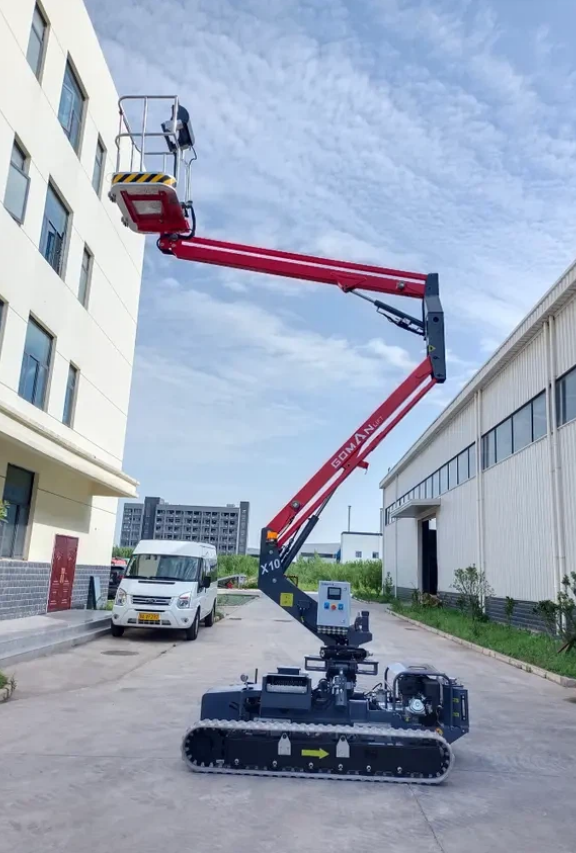
Goman Heavy Industry Technology Co., Ltd. offers a range of boom lifts designed for optimal usability, including the crawler boom lift, which offers superior stability and flexibility for outdoor use.
Tracks for rough terrain: Crawler boom lifts are ideal for working in uneven or difficult-to-access environments, offering greater stability and traction than wheeled models.
Enhanced reach: These lifts offer both vertical and horizontal reach, making them versatile for various job site needs.
By choosing the right boom lift configuration, operators can maximize their efficiency and safety on job sites. For example, the crawler boom lift provides excellent maneuverability on rugged surfaces while maintaining a high level of precision.
In conclusion, knowing how to use a boom lift correctly is essential for ensuring both the safety and productivity of your projects. By following best practices, conducting thorough inspections, and understanding how to control and maneuver the lift, operators can work efficiently while minimizing risks. Goman Heavy Industry Technology Co., Ltd. provides top-tier boom lifts designed for ease of use, safety, and performance, helping your team get the job done quickly and safely. For more information on our products, contact us today.
1. What should be included in a boom lift pre-use inspection?
A pre-use inspection should include checks on the base, hydraulic systems, platform guardrails, load sensors, and battery/fuel levels. Always perform this check before starting the lift.
2. How do I safely operate a boom lift on rough terrain?
Use a crawler boom lift for better stability on uneven ground. Always move slowly and avoid soft surfaces or steep inclines that could cause the lift to tip.
3. How do I prevent overloading a boom lift?
Always check the weight limit specified for the lift platform and ensure the combined weight of operators, tools, and equipment does not exceed the limit.
4. What are the key safety regulations for using a boom lift?
Key safety regulations include wearing PPE, following weight limits, ensuring the platform is stable, and performing regular equipment inspections to prevent malfunctions.
