


No.188 Doubu Avenue, Hannan District, 430090 Wuhan, China


Views: 0 Author: Site Editor Publish Time: 2026-10-16 Origin: Site


Complex job sites present tough hurdles every single day. Deep mud, steep slopes, and restricted access zones cause major delays. These realities immediately rule out standard slab equipment. You cannot rely on basic machinery when the ground gives way or obstacles block your approach. Choosing between vertical heavy-lifting and horizontal reach dictates your project pacing. This choice directly determines safety compliance and overall site efficiency. Picking the wrong machine leads to stalled work. It can also create dangerous situations for your crew. You risk sinking a heavy machine into soft soil or failing to reach a critical work zone. We created an evidence-based comparison to help you decide. You will discover which machine aligns best with your specific site conditions. We will explore payload requirements and operational constraints in deep detail. This guide ensures you match your exact needs with the correct elevated work platform.
Crawler scissor lifts excel in providing maximum platform capacity and stability on soft or uneven terrain, strictly for vertical access.
Boom lifts (articulating or telescopic) are mandatory when the job requires horizontal outreach, up-and-over clearance, or working around ground-level obstacles.
Site footprint matters: A tracked scissor lift offers a compact turning radius compared to the wide tail swing and outrigger requirements of many rough terrain boom lifts.
Logistics dictate cost: Both machines require flatbed transport, but differences in machine weight and ground bearing pressure will impact site mobility and delivery costs.
Physics drives equipment design. Center-of-gravity mechanics separate these machines fundamentally. Scissor lifts keep the entire load directly over the chassis. Crisscrossing steel braces push the platform upward in a straight line. Gravity pushes straight down through the supporting linkages. Boom lifts extend their load outward instead. They act like giant levers. They require heavy counterweights built into the base. These massive counterweights prevent the machine from tipping over during maximum extension.
This structural trade-off determines what you can safely lift. You must evaluate scissor lift platform capacity early in your planning phase. Vertical-only lifting supports massive payloads safely. You can elevate multiple workers simultaneously. You can load heavy tools and thick sheet materials onto the deck. Many standard models safely handle well over 1,000 pounds. This centralized weight distribution makes them incredibly stable work platforms.
Boom lifts offer horizontal reach capabilities instead. You strictly need this outreach for specific tasks. Workers often access building facades positioned over deep excavations. They reach complex piping routed behind permanent structures. They navigate around tree canopies blocking direct access. You trade ultimate lifting capacity for spatial flexibility. We always recommend calculating tool weight before assigning a machine to a task. Operators often mistakenly load boom lift baskets with heavy materials meant for scissor decks.
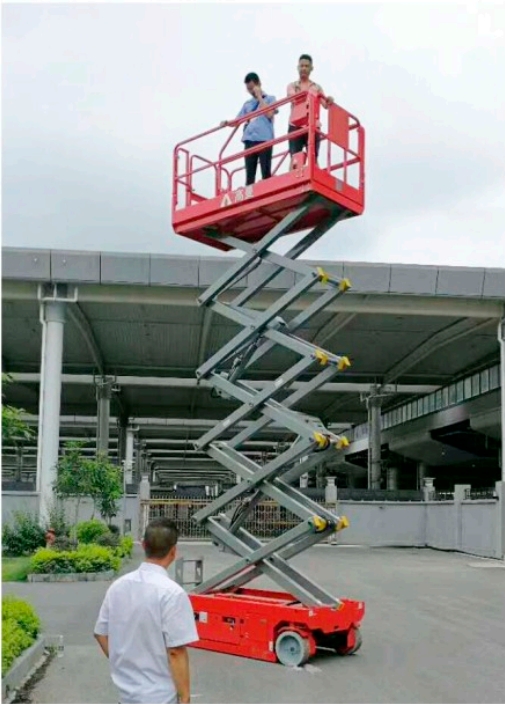
Continuous tracks master difficult terrain easily. They distribute machine weight across a massive surface area. This broad distribution drastically reduces ground bearing pressure. Think of them operating exactly like snowshoes. They float over soft surfaces without sinking. A standard rough terrain scissor lift relies on tires. Heavy tires sink rapidly into soft mud or loose gravel. Tracks keep you moving forward safely through terrible ground conditions.
These machines excel on severe inclines. We consider them the ultimate scissor lift for uneven ground. They feature impressive gradeability specifications. Many utilize active auto-leveling outriggers. Sensors detect ground slopes instantly. Hydraulic legs extend independently to stabilize the base. They level the chassis perfectly before the platform ever rises. This allows safe elevation on steep slopes and rutted mud.
Operational footprint matters heavily on cramped sites. Urban construction sites feature extreme spatial limits. A tracked scissor lift provides a zero-turn radius. The machine turns entirely within its own footprint. It maneuvers easily through narrow corridors. It navigates tight spaces between buildings or high retaining walls. Alleys between old buildings leave zero room for wide axles to pivot.
You must consider a few strict limitations. Tracks travel much slower than wheeled machines. You sacrifice transport speed for superior stability. You also face vertical-only access limitations. Deck extensions provide minimal horizontal reach. You must park the machine directly beneath your target overhead. Wind gusts also affect extended platforms, though vertical linkages handle wind deflection better than extended booms.
You need boom lifts when horizontal reach dictates the job entirely. Telescopic booms feature straight stick designs. Hydraulic cylinders push telescoping sections outward sequentially. They offer maximum vertical height and extreme forward reach. You need a very wide operational footprint to deploy them safely. They also demand a perfectly clear line of sight. Operators must see the basket path clearly at all times. Blind spots cause fatal crushing accidents.
Articulating booms utilize multiple hinged sections. Industry professionals call them knuckle booms. Multiple pivot points articulate independently. This design provides essential up-and-over positioning. You maneuver around complex obstacles easily. You can reach over roof trusses safely. You can bypass existing pipework blocking your vertical path. This allows operators to navigate through complex steel superstructures seamlessly.
Terrain handling requires careful attention. Boom lifts feature robust four-wheel drive systems. They use oscillating axles to handle rocky dirt and debris. However, they lack extreme flotation capabilities entirely. They easily bog down in deep mud or loose sand. A heavy Crawler Scissor Lift handles those severe ground conditions much better.
Boom lifts possess significant operational limitations. Platform capacity strictly restricts your options. Baskets typically handle only 500 to 1,000 pounds maximum. You cannot hoist heavy building materials easily. Two workers and standard hand tools often max out the capacity. You also need larger spatial requirements. The chassis must rotate during operation to position the basket. This rotation creates dangerous tail swing hazards. You must keep the swing radius completely clear of nearby walls and ground workers.
We use a structured evaluation framework for all site audits. It eliminates dangerous guesswork. It prevents costly equipment mismatches before delivery.
You must assess the site surface accurately. We follow a specific sequence for ground evaluation to guarantee safety:
Measure the exact depth of loose soil, mud, or sand.
Identify hidden voids or recent excavations nearby.
Check surface firmness immediately after heavy rainfall.
Calculate the maximum slope angle across the intended travel path.
Deep mud or sand strictly favors tracked equipment. Firm but uneven dirt accommodates wheeled boom lifts. Address all slope limitations carefully. Active leveling systems remain mandatory for compliance. Industry safety standards require perfectly level bases before elevation begins.
Evaluate your overhead access paths carefully. Determine if you have direct overhead access or offset access. A window installation might sit behind a wide ground-level excavation pit. You cannot drive straight across the pit. A self-propelled scissor lift strictly requires a direct vertical path. If you cannot park the chassis directly beneath the work area, you cannot use it. Offset targets demand boom lift capabilities to reach across the gap safely.
Calculate your total combined weight accurately. Add the weight of your workers, their tools, and all raw materials. Consider a team installing industrial glass panes. Two workers weigh 450 pounds combined. Their specialized tools add another 100 pounds. The glass pane itself weighs 600 pounds. A standard 500-pound boom lift basket fails instantly in this scenario. Installing heavy exterior cladding requires massive structural support. Hoisting large HVAC components demands maximum base stability. High platform capacity always mandates a scissor lift configuration.
Moving heavy machinery onto a job site requires precision. Transport and mobilization demand careful logistical planning. Both machine types require specialized flatbed trailers for delivery. However, crawler equipment presents unique logistical challenges. You may require specific loading ramps to handle the track angle. Tracks need specific tie-down protocols. Chains must cross correctly to prevent lateral shifting. Tracked machines slide differently than rubber-tired machines during transit.
Ground damage risks require your immediate attention. Steel tracks can mark finished concrete easily. They destroy delicate landscaping quickly during turns. Wheeled booms cause entirely different problems. Heavy wheeled booms create deep ruts in soft lawns. We highly recommend specifying non-marking rubber tracks for indoor facilities or finished surfaces. They protect the floor while providing excellent traction.
Evaluate daily maintenance and expected downtime factors. Tracked machines require regular track tensioning. Operators must clear thick mud from the undercarriage daily. Mud hardens like concrete overnight. Neglected tracks snap under high tension. Wheeled lifts require routine tire inspections instead. Sharp debris causes punctures. Punctures cause immediate delays.
We developed a shortlisting logic matrix to guide your final decision. Review the variables below to match equipment to your scenario.
Site Scenario | Recommended Equipment | Primary Reason |
|---|---|---|
Deep mud, flat surface, heavy payload | Tracked Scissor Lift | Maximum flotation prevents sinking; supports heavy materials. |
Firm dirt, offset target over an obstacle | Articulating Boom Lift | Provides up-and-over reach capabilities without driving closer. |
Steep uneven slope, direct vertical access | Tracked Scissor Lift with Outriggers | Auto-leveling outriggers stabilize the base on severe inclines safely. |
Indoor finished floors, high reach required | Wheeled Boom Lift (Non-marking tires) | Prevents floor damage while offering maximum vertical extension. |
Your final equipment choice hinges directly on three critical factors. Reach geometry, ground conditions, and total payload dictate the correct machine type.
Tracks provide unmatched stability and flotation on deep mud.
Booms deliver necessary offset reach over dangerous ground obstacles.
Scissor lifts provide the required lifting capacity for multiple workers and heavy materials.
Never over-specify or under-specify equipment without conducting a thorough site audit first.
Contact our specialized sales team today. We can perform a comprehensive site evaluation for your crew. We gladly provide detailed specification sheets for specific tracked machines and rough terrain booms. Let us help you secure the safest access platform for your next project.
A: Yes. Many modern models feature non-marking rubber tracks and electric or hybrid power options. These specific modifications eliminate harmful exhaust fumes and prevent floor scuffing. This makes them perfect for operating inside finished warehouses, shopping malls, or large indoor facilities requiring heavy vertical lifting.
A: Standard industry models typically drive safely on slopes between 15 and 20 degrees. However, active leveling capabilities differ significantly between manufacturers. Auto-leveling outriggers can sometimes accommodate steeper setup angles. You must always consult the specific operator’s manual for exact gradeability limits before operating on any incline.
A: Yes. Under OSHA and ANSI standards, operators strictly require different certifications. Scissor platforms fall under MEWP Type 3, Group A. Boom lifts categorize as Group B machinery. You must also complete specific familiarization training for operating tracked undercarriages safely, as steering mechanics differ completely from wheeled steering.
