


No.188 Doubu Avenue, Hannan District, 430090 Wuhan, China


Views: 0 Author: Site Editor Publish Time: 2026-03-28 Origin: Site


Operating a wheeled spider lift on slopes presents unique challenges that demand extra caution and preparation. While these lifts are known for their versatility and ability to access hard-to-reach areas, ensuring the safety of operators and bystanders when using them on slopes is essential. Whether you're using a wheeled spider lift for tree pruning, building maintenance, or construction work, it's crucial to follow a safety checklist tailored to slope conditions.
At Hubei Goman Heavy Industry Technology Co., Ltd., we specialize in manufacturing high-quality lifting equipment, including wheeled spider lifts that provide excellent stability and reach. We understand the risks associated with operating these machines in sloped environments and believe that a robust safety protocol is key to preventing accidents and ensuring optimal performance. In this guide, we’ll walk you through an essential safety checklist for operating wheeled spider lifts on slopes, highlighting best practices, precautions, and key points to consider before and during use.
Wheeled spider lifts are compact, high-performance machines designed to navigate challenging terrain. With a unique spider-like leg design and versatile wheel-mounted system, these lifts provide superior mobility on rough or sloping surfaces, enabling access to high elevations with stability. Despite their capability to work on slopes, wheeled spider lifts come with specific operational risks, such as potential instability and tipping, especially when working on steep grades.
It's essential to understand the machine's capabilities, the environment it will operate in, and the specific safety measures required when working on inclines. Whether it's a moderate slope or a steeper incline, wheeled spider lifts should be operated within the limits specified by the manufacturer to ensure safe and effective operation.
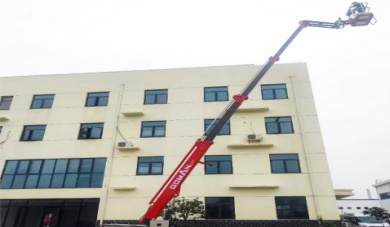
Before operating a wheeled spider lift on a slope, conducting a comprehensive inspection of the equipment is crucial to ensure safety and proper functionality. Each component must be checked thoroughly to prevent accidents or malfunctions during use. A detailed inspection helps identify potential issues that could compromise stability, performance, or safety, especially when working on sloped surfaces.
Key steps to follow:
Inspection Area | Key Actions | Importance |
Hydraulic System | - Inspect hydraulic lines, cylinders, and controls. | Ensures the hydraulic system is free from leaks, preventing loss of functionality, especially during critical lifting. |
Tires and Wheels | - Check for visible damage or wear. | Maintains stability and traction, ensuring the lift can operate safely on sloped surfaces. |
Safety Devices | - Test tilt alarm, stabilization system, and emergency stop function. | Verifies that safety systems are operational and will trigger in case of instability or emergency. |
Operator's Manual | - Review the manufacturer's guidelines for slope operation. Ensure the recommended slope limits are adhered to. | Provides clarity on operational limits and safety protocols for sloped environments. |
By performing these checks, you ensure the wheeled spider lift operates efficiently, reducing risks and enhancing safety for operators working on slopes.
One of the most critical safety precautions when operating wheeled spider lifts on slopes is ensuring proper stabilization. Even though spider lifts are designed to work on uneven surfaces, improper leveling can lead to tipping or loss of control.
Key steps to follow:
· Deploy stabilizers: Always deploy the stabilizers on the lift before using it on a slope. These stabilizers should be fully extended to provide a stable base. This reduces the likelihood of the lift tipping over.
· Level the platform: Ensure that the platform is level before beginning any work. Use the built-in leveling system (if available) or manually adjust the lift to ensure it is stable.
· Check for soft ground: Avoid operating on soft, uneven, or unstable ground. If the surface is wet or loose, the lift may sink or become unstable, increasing the risk of tipping.
Understanding the weight distribution and respecting the lift’s capacity is crucial for preventing accidents when working on slopes. Operating a wheeled spider lift beyond its rated capacity can cause mechanical failure or instability, especially on inclines.
Key steps to follow:
· Verify load limits: Always ensure that the total weight of the lift, operator, and any equipment being lifted does not exceed the manufacturer's specified weight limit.
· Balance the load: Make sure that the load is evenly distributed on the platform. Avoid placing excessive weight on one side of the lift, which could cause it to tip over, especially when working on a slope.
· Avoid overloading the lift: Never exceed the lift’s rated load capacity, as doing so can cause the lift to lose stability, particularly on steep grades.
When operating a wheeled spider lift on a slope, it’s important to control the speed of movement to maintain stability and prevent accidents. Rapid movements or jerky adjustments can lead to loss of control or tipping.
Key steps to follow:
· Operate at a slow, controlled speed: When moving up or down a slope, always operate the lift slowly to ensure better control and reaction time. High-speed movements can destabilize the lift and increase the risk of tipping.
· Avoid sudden directional changes: Sudden turns or directional shifts can cause the lift to become unbalanced, especially on sloped surfaces. Move the lift gently and smoothly to ensure stability.
· Use appropriate speed settings: Adjust the lift’s speed settings based on the slope’s grade and the weight load. Higher speeds should only be used on level surfaces or minimal inclines.
Weather conditions play a significant role in the safety of operating wheeled spider lifts on slopes. Wind, rain, and snow can increase the risks of accidents, particularly on sloped surfaces.
Key steps to follow:
· Monitor weather conditions: Never operate a wheeled spider lift in high winds or stormy conditions. High winds can make the lift more susceptible to tipping or losing control, especially when working at height on slopes.
· Check for wet or icy surfaces: Wet or icy surfaces significantly reduce traction, making it difficult for the lift to maintain stability on slopes. Avoid operating the lift on surfaces that are slippery due to rain, snow, or ice.
· Work in daylight: It is safer to operate the lift during daylight hours when visibility is better. Avoid working on slopes in low-light conditions unless the lift is equipped with adequate lighting.
Clear communication is vital when operating a wheeled spider lift on slopes, especially if multiple people are involved in the operation. Ensure that everyone is aware of safety protocols, emergency procedures, and the signals used to communicate.
Key steps to follow:
· Establish communication protocols: Ensure that all team members are in constant communication, especially when the lift is being moved or positioned. Radios or hand signals should be used to ensure safe coordination.
· Prepare for emergencies: Familiarize yourself with emergency shutdown procedures and always have a clear escape route in case of malfunction or danger. Know where emergency stop buttons are located on the lift.
· Wear proper safety gear: Always wear appropriate personal protective equipment (PPE), such as a harness, helmet, and non-slip footwear, to reduce the risk of injury while operating the lift.
Operating wheeled spider lifts on slopes requires heightened awareness and careful preparation. By following the essential safety checklist, you can significantly reduce the risk of accidents and ensure smooth, efficient operation. From pre-operational inspections to load distribution and stabilization, each safety measure plays a vital role in maintaining the lift's stability and preventing potential hazards.
At Hubei Goman Heavy Industry Technology Co., Ltd., we are committed to providing high-quality wheeled spider lifts that prioritize safety, durability, and performance. Our equipment is designed to help you work efficiently and safely, even in challenging environments. For more information about our wheeled spider lifts or to inquire about our safety guidelines and training programs, please feel free to contact us today.
A wheeled spider lift is a type of aerial work platform used for accessing elevated areas in hard-to-reach locations, often in confined or sloped spaces. It is commonly used for tasks such as maintenance, construction, and tree care.
Before using a wheeled spider lift on a slope, perform a thorough inspection, ensure the stabilizers are deployed, and check the load capacity. Additionally, ensure that the lift is positioned on a solid and stable surface.
The main risks include instability, tipping, loss of control, and environmental hazards such as wet or slippery surfaces. Always use stabilizers, maintain low speeds, and monitor weather conditions for safe operation.
Routine maintenance should be performed regularly, ideally every 1-2 weeks, to check for wear and tear on tires, hydraulics, and the overall structure. Always follow the manufacturer’s maintenance schedule for optimal performance.
