


No.188 Doubu Avenue, Hannan District, 430090 Wuhan, China


Views: 0 Author: Site Editor Publish Time: 2026-08-03 Origin: Site


Reaching extreme indoor heights often demands robust aerial work equipment. However, rolling heavy machinery over fragile flooring materials presents severe financial and safety risks. Facility managers and contractors constantly struggle to balance necessary high-reach access against strict structural limitations. A single mathematical miscalculation can crack expensive marble, crush raised tiles, or completely compromise a suspended concrete slab.
We will demystify exactly how these machines distribute their weight during both transit and boom operation. You will gain a practical framework to calculate ground bearing pressure, select proper equipment, and permanently prevent costly floor damage during your next indoor project.
A spider lift generates two distinct types of floor load: transit pressure (spread across tracks) and operational point load (concentrated on outriggers).
Total machine weight is an insufficient metric; Ground Bearing Pressure (GBP) and outrigger point loads are the actual variables that dictate floor safety.
The use of a tracked spider lift significantly reduces transit ground pressure compared to wheeled alternatives, making it the standard for sensitive indoor floors.
Proper load distribution via outrigger pads can reduce concentrated floor pressure by up to 80%, satisfying most indoor structural compliance requirements.
Many professionals mistakenly judge indoor equipment safety based solely on total machine weight. A 6,000-pound machine does not exert 6,000 pounds of pressure on a single floor tile. Ground Bearing Pressure (GBP) matters much more. We measure GBP in pounds per square inch (psi), kilopascals (kPa), or kilograms per square centimeter (kg/cm²). GBP tells you exactly how intensely the equipment presses against a specific spot.
You must treat the equipment as a "live load" while it moves. It becomes a dynamic load once the boom operates. A static load simply sits still. A live load travels across the surface. A dynamic load shifts its weight balance as its components move. Building codes strictly regulate how much live load a specific floor can safely handle.
Weight transfer creates the highest structural risk during aerial operations. The machine’s center of gravity shifts dramatically as the boom extends and rotates. This movement transfers up to 80% of the total machine weight onto a single outrigger. A perfectly balanced machine is a myth during active work.
Always verify your numbers before starting work. Manufacturer specification sheets provide the absolute maximum outrigger loads. Do not guess these figures. You must cross-reference these maximum values with your building blueprints. Better yet, consult a licensed structural engineer. They will assess whether your specific floor can withstand the localized pressure.
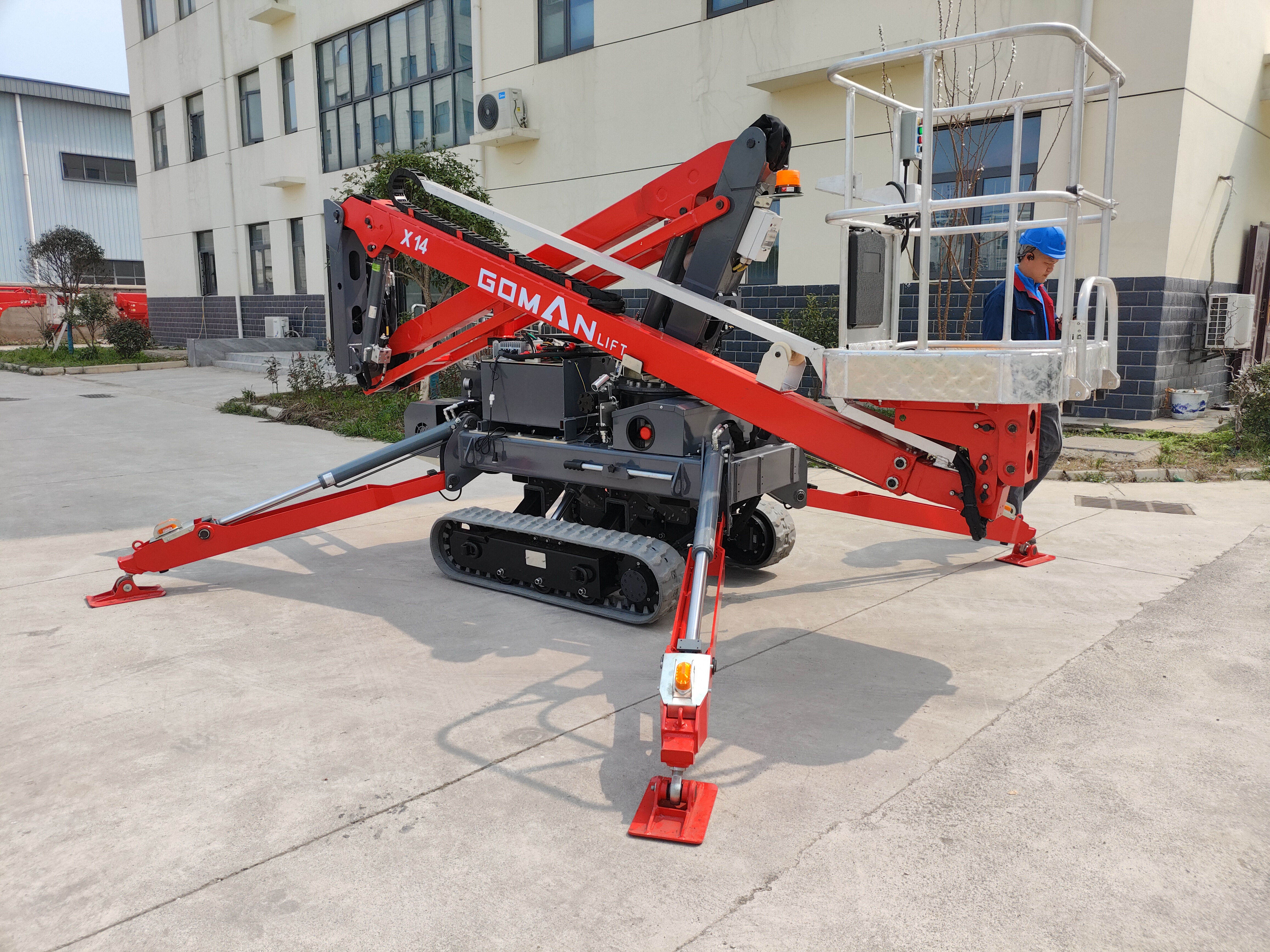
Moving the machine into position introduces unique structural stresses. A tracked spider lift utilizes mechanics specifically designed for sensitive terrain. Long, wide rubber tracks spread the entire machine weight over a massive surface area. This clever design prevents the equipment from sinking into soft ground or cracking hard surfaces.
Tracked machines easily outperform wheeled boom lifts indoors. Wheels concentrate immense weight onto four tiny contact patches. Tracks distribute this same weight evenly across continuous rubber belts. In fact, a standard compact spider lift often exerts less ground pressure per square inch than a person wearing high heels.
Transit still carries notable risk factors. Turning radius pivoting creates dangerous friction. When rubber tracks twist sharply, they can pull up tiles or scorch hardwood. Transition thresholds also pose hazards. Moving from concrete to carpet or over door frames creates sudden pressure spikes. Ramps temporarily shift the machine's center of gravity, multiplying the downward force on the lower track.
The setup phase introduces the highest risk of structural damage. The continuous rubber tracks lift entirely off the ground. Suddenly, the machine transfers its entire mass onto four small outrigger feet. The massive track surface area disappears.
Point loading math quickly becomes intimidating here. A tiny outrigger foot creates massive localized pressure. Imagine driving a nail into wood instead of pressing a flat board against it. A small contact point drastically increases the psi against the floor surface.
You must calculate the worst-case scenario. Never assume the machine divides its weight into an even 25% split across all four legs. Operators will extend the boom fully over one corner. This action shifts extreme force onto one individual outrigger. Your floor must survive this maximum potential load, not the average resting weight.
Every indoor job site presents different structural variables. You must thoroughly evaluate the floor composition before authorizing equipment entry. Concrete slab-on-grade floors usually offer high load capacity. The solid earth beneath them absorbs the heavy pressure. Suspended slabs present a much higher danger. These second-story or mezzanine floors have strict live load limits. Exceeding these limits can cause catastrophic structural failure.
Surface finishes require careful evaluation. Decorative floors easily suffer cosmetic or structural damage. Marble cracks under uneven pressure. Terrazzo chips if outriggers slip. Hardwood dents permanently under heavy rolling loads. Raised access tiles will completely collapse if you exceed their individual panel rating.
Doorways often disguise hidden floor weaknesses. A narrow access spider lift easily fits through standard single or double doors. It navigates tight corridors effortlessly. However, the flooring immediately inside that doorway rarely features industrial load-bearing reinforcement. Lobby entrances often prioritize aesthetics over structural density.
Assessment Factor | Primary Measurement | Common Risk Level | Required Action |
|---|---|---|---|
Subfloor Material | Thickness and composition | High (Suspended) / Low (On-Grade) | Verify structural blueprints for baseline strength. |
Underfloor Utilities | Depth of heating/plumbing | Critical | Scan floors to locate hidden pipes or radiant coils. |
Concrete Age | Curing time and visible wear | Moderate | Inspect for micro-fractures before applying point loads. |
Live Load Rating | psf or kg/m² | Critical | Consult an engineer to compare rating against machine GBP. |
Equipment configuration directly impacts floor safety. You cannot just rent the first available aerial platform. Track selection remains vital for indoor success. Always recommend white, non-marking tracks. Black industrial rubber leaves permanent scuff marks on sensitive surfaces during tight pivot maneuvers. Cleaning these marks costs significant time and money.
Power sources also dictate indoor feasibility. Internal combustion engines produce toxic exhaust and intense vibrations. These vibrations can further stress delicate floors and loosen raised tiles. You should utilize a hybrid spider lift equipped with a lithium-ion battery or a plug-in electric motor. This configuration eliminates carbon monoxide emissions and runs smoothly without aggressive shaking.
Buyers often struggle with weight-to-height ratios. Many contractors "over-specify" their equipment. They rent a machine with 90 feet of reach for a 60-foot ceiling. Choosing a lift with just 10 feet more reach than necessary can add thousands of pounds to the machine's base weight. Evaluate your exact height requirements. Select the lightest machine capable of reaching your target safely.
You cannot deploy aerial equipment indoors without aggressive load mitigation. Outrigger pads serve as your primary defense against floor destruction. These pads manipulate the physics of load spreading. Doubling the surface area of an outrigger pad mathematically quarters the pressure on the floor underneath it. You instantly reduce the destructive psi by providing a wider footprint.
Material selection determines pad effectiveness. Not all spreading materials offer equal protection. Consider these common options carefully:
UHMW Polyethylene Pads: These lightweight, ultra-durable plastic pads resist moisture and do not splinter. They work perfectly for smooth indoor surfaces like sealed concrete or vinyl.
Heavy-Duty Plywood: Thick, layered timber offers decent load spreading on a budget. However, it can warp, absorb moisture, or transfer wood grain textures onto soft flooring.
Steel Plates: Steel handles immense pressure without bending. Use steel when working over extremely fragile trenches or bridging weak utility access panels. Always place a rubber mat under the steel to prevent scratching.
Transit protection requires equal attention. Moving the machine across a luxury commercial lobby demands proactive shielding. We strongly recommend laying down high-density floor protection boards along the entire travel path. You can use products like Masonite, Ram Board, or continuous plywood runs. This temporary pathway absorbs track friction, disperses transit weight, and completely eliminates tread marking.
Indoor high-reach operations are entirely safe when you mathematically align equipment pressure with building capacities. Ground Bearing Pressure and outrigger point loads remain the ultimate determining factors for project success. You must look past the total machine weight and analyze how the equipment concentrates its mass dynamically.
Decision-makers should prioritize rentals based on footprint size and weight efficiency. Look for non-marking hybrid models that minimize vibration and cosmetic damage. Avoid over-sizing your equipment just to have extra reach.
Before your next indoor project begins, request technical specification sheets directly from your equipment provider. Present these precise outrigger load calculations to a structural engineer. Gaining professional clearance prevents catastrophic accidents and ensures your decorative floors survive the job flawlessly.
A: Yes, provided the doorways are wide enough for a narrow access model and the joist structure is certified to handle the static weight plus dynamic forces. Plywood tracking paths are mandatory.
A: Divide the maximum potential weight shifted to one leg (often provided by the manufacturer as "Max Outrigger Load") by the square footage of the outrigger pad being used.
A: Static (dead) load is the permanent weight of the building structure. Live load includes temporary machinery, people, and materials. Spider lifts are calculated against the floor's maximum allowable live load.
A: No. They must be specifically requested or verified when sourcing a hybrid or electric compact model.
