


No.188 Doubu Avenue, Hannan District, 430090 Wuhan, China


Views: 0 Author: Site Editor Publish Time: 2026-08-17 Origin: Site


Procuring facility equipment involves incredibly high stakes for facility managers and operation directors. You must carefully balance upfront capital expenditures against long-term operational uptime and critical safety standards. Complex facility maintenance adds layers of difficulty to this challenging process. You often face fragile flooring, rigid weight restrictions, and strict indoor emission regulations. Standard aerial lifts simply fail under these demanding conditions. A specialized aerial platform provides a high-return asset for highly constrained environments. You can evaluate these units strictly against stringent performance metrics and strict safety compliance guidelines. This article explores the precise steps needed to select the ideal machine for your facility. You will learn how to map site constraints accurately. We explore how to evaluate core technical specifications thoroughly. Finally, you will discover how to navigate lifecycle maintenance realities to ensure maximum operational productivity.
Purchasing decisions must prioritize ground bearing pressure and doorway dimensions over maximum working height alone.
Selecting a hybrid spider lift mitigates the indoor/outdoor usage divide, though it requires specific battery and engine maintenance protocols.
True equipment ROI relies on dealer service Level Agreements (SLAs), parts availability, and strict adherence to ANSI/OSHA training compliance.
On-site demonstrations are mandatory to validate outrigger footprints against actual facility obstacles.
Physical constraints always dictate your initial procurement path. You cannot force a large machine into a confined space. Establishing baseline success criteria prevents costly purchasing mistakes.
Navigating tight indoor spaces presents a major operational hurdle. Measure single and double doorway widths carefully across your entire facility. Map out tight corridors and sharp corners on your building blueprints. Check elevator weight capacities and cabin dimensions thoroughly. Standard industrial doors often measure 36 inches wide. Many standard boom lifts easily exceed this dimension. When dealing with these severe physical bottlenecks, deploying a narrow access spider lift becomes mandatory. It ensures you can reach interior atriums without requiring costly structural modifications. You must also measure ceiling clearances in transit routes. Ensure the stowed height of your chosen machine passes safely underneath hanging pipes or low ductwork.
Facilities frequently feature highly sensitive floor surfaces. Think about raised access computer floors, historic marble lobbies, and wooden gymnasium courts. Delicate outdoor turf also requires careful consideration. You must establish the maximum allowable ground pressure for every operational zone. Engineers usually measure this metric in pounds per square foot (psf) or kilopascals (kPa). Overloading these fragile surfaces causes immediate catastrophic damage. Calculate the stowed weight during transport. Then, calculate the deployed pressure when outriggers engage the floor. We strongly advise using specialized load-spreading pads. These essential accessories distribute the machine's weight across a significantly wider surface area.
Define your success criteria based on actual daily applications. Will your team primarily perform heavy HVAC maintenance? Do you need the equipment for atrium window cleaning? Does your exterior crew handle high-reach tree care? Your specific daily tasks dictate the required basket payload. Heavy tools and multiple technicians require a higher weight capacity. Lighter tasks allow for lighter, more agile machines. These practical tasks also determine your necessary vertical and horizontal reach. Always align the equipment profile strictly to your primary facility workflow.
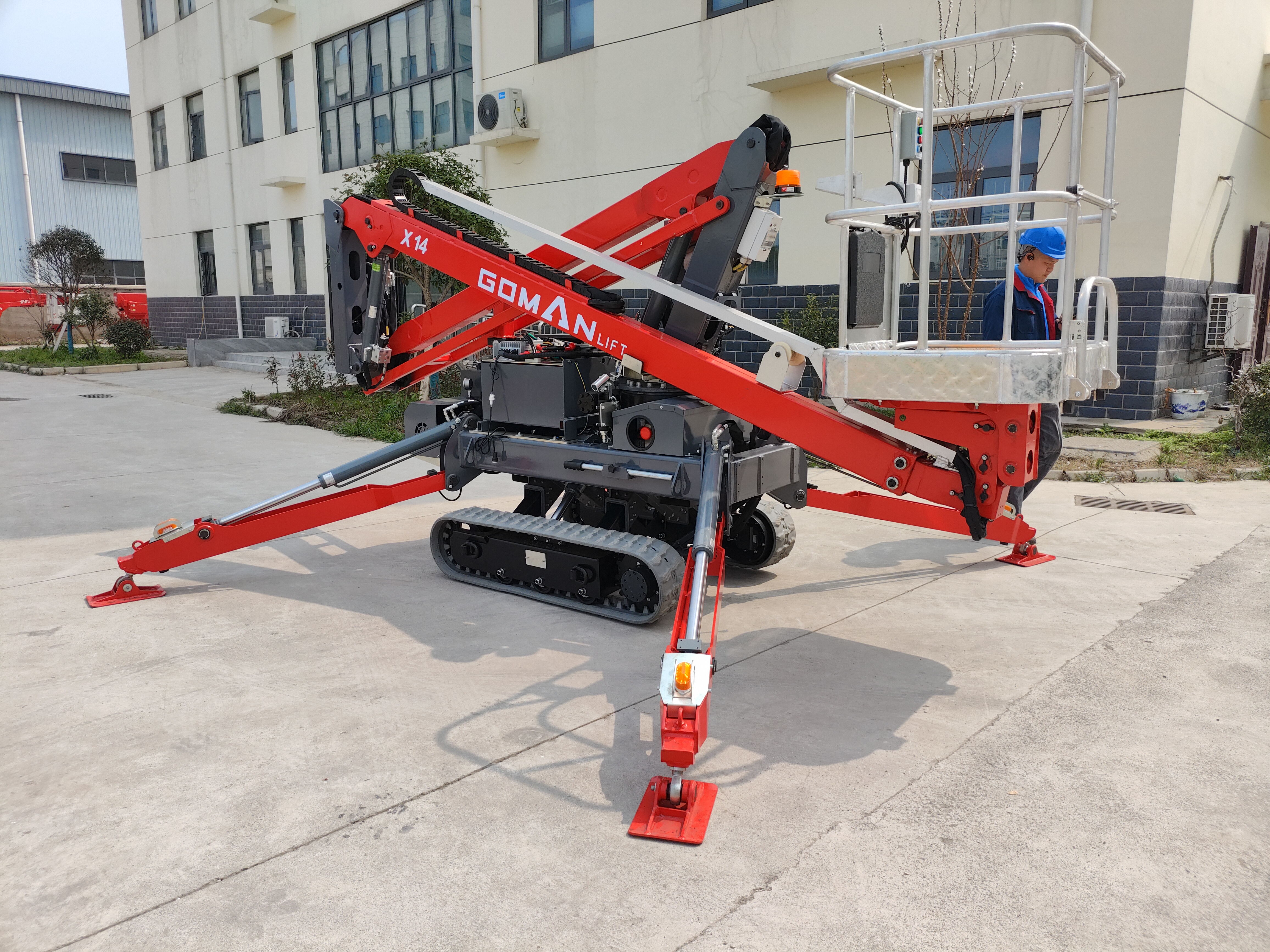
Once you establish physical constraints, focus your attention on technical specifications. Precision matters heavily during this crucial evaluation phase.
Many buyers focus exclusively on maximum vertical working height. This flawed approach ignores critical functional realities. You must evaluate the specific "up and over" clearance capabilities. Can the articulated boom reach over permanent facility fixtures? Look closely at the machine's ability to navigate around fixed mezzanines or hanging architectural elements. Cross-reference the maximum outreach limitations when the basket holds its full safe working load. Maximum horizontal outreach often decreases significantly when you load heavy materials into the basket. Consider these fundamental limitations:
Platform weight limits directly decrease maximum horizontal extensions.
Adding multiple operators restricts extreme outreach capabilities instantly.
Loading heavy diagnostic tools reduces overall safe working loads quickly.
Always consult the manufacturer's range diagram. Ensure it covers your specific high-reach targets accurately.
Outrigger flexibility remains vital for uneven or asymmetrical setups. You might need to deploy the machine in narrow aisles. Sometimes you must set up directly on complex stairwells. Look for machines offering variable outrigger positioning. This feature allows narrow deployment on one side and wide deployment on the other. Track selection significantly impacts performance. A robust tracked spider lift offers excellent terrain versatility. Compare track types carefully. Non-marking tracks are essential for delicate indoor applications. They prevent ugly scuff marks on polished commercial floors. Conversely, aggressive rubber treads handle steep outdoor gradients effectively.
Assess the operational realities of different internal power sources. Lithium-ion batteries provide rapid charging capabilities and zero indoor emissions. They do not suffer from traditional battery memory effects. Standard lead-acid batteries cost less upfront. However, they require strict daily watering schedules and regular equalization charges. If your team transitions frequently between indoor facilities and outdoor grounds, evaluate dual-power options. A versatile hybrid spider lift combines a combustion engine and an electric motor. It allows seamless indoor and outdoor operation. It prevents emission violations inside while providing unlimited driving range outside.
Equipment longevity depends directly on proactive care and reliable vendor partnerships. You must plan for regular maintenance intervals.
Every complex machine experiences eventual wear and tear. You must track the expected lifespan of all proprietary components. Proprietary rubber tracks, high-pressure hydraulic hoses, and specialized outrigger pads degrade over time. Detail their exact replacement cycles during your early planning phase. Factor in the necessary labor hours for mandatory interventions. Mandatory annual inspections keep your machine legally compliant. Routine load testing prevents sudden structural failures. Regular preventative maintenance reduces unexpected operational downtime. Establish a dedicated maintenance log immediately upon delivery.
A machine is only as reliable as its local service vendor. Evaluate supplier credibility very carefully before signing contracts. Look closely at their local OEM parts inventory. Check their specific technician dispatch times. Fast response times ensure minimal machine downtime. Read the fine print on all warranty inclusions versus exclusions. Pay special attention to clauses regarding electronic control modules. Look for specific language covering battery degradation over time. Delays in overseas shipping can idle your essential equipment for weeks.
Safety standards form the absolute core of all facility operations. You cannot compromise on these elements under any circumstances.
Verify your selected unit meets all current design and testing standards. In North America, demand strict ANSI A92 or CSA B354 compliance. You should mandate built-in redundant safety features. Automatic tilt sensors prevent boom deployment on unsafe inclines. Outrigger micro-switches provide a crucial secondary safety layer. They ensure the boom remains locked until the chassis becomes perfectly level. Emergency manual descent valves act as critical lifelines. They allow operators to lower the basket safely during sudden electrical power losses.
Never underestimate the steep learning curve. Complex outrigger leveling requires focused skill and practice. Proper boom sequencing demands strict situational awareness. Establish firm requirements for structured OEM operator training. Standardized pre-use inspection checklists mitigate your daily operational liability. We strongly recommend logging all daily checks digitally. This guarantees operators verify hydraulic fluid levels before elevating. They must check track tension and inspect harness anchor points daily.
Follow a highly systematic approach to finalize your major purchase. A structured process removes guesswork from the equation.
Match your final shortlist directly to your specific physical environment. We recommend following these procedural steps:
If you primarily navigate highly constrained indoor zones, prioritize a lightweight compact spider lift. It limits surface damage and easily clears tight corridors.
If you handle heavy-duty exterior facility grounds, adjust your focus. You need superior ground clearance and larger chassis dimensions.
If sloped perimeters dominate your site, prioritize a heavy-duty model. Look for advanced auto-leveling track capabilities.
Your specific use case must drive the final equipment selection.
Never finalize a purchase based on paper specifications alone. Insist firmly on an on-site demonstration. Conduct this test strictly in your facility's most restrictive work zone. Validate outrigger footprints against actual physical obstacles. Confirm the machine clears your sharpest corners safely. Test the spider lift on your steepest access ramp.
Structure your final vendor evaluation objectively. We recommend a balanced scoring approach. Compare multiple vendors using clear quantitative metrics.
Evaluation Category | Weighting Percentage | Key Focus Areas |
|---|---|---|
Initial Purchase Value | 30% | Base equipment price, delivery fees, initial commissioning costs. |
Service Level Agreements (SLA) | 40% | Technician response time, local parts stocking, warranty length. |
Operational Fit and Safety | 30% | Outrigger footprint, ground bearing pressure, redundant interlocks. |
Successful equipment procurement operates as a strict risk-mitigation exercise. It goes far beyond a simple capability upgrade. You must accurately map your physical facility constraints first. Assess working heights alongside critical maximum outreach limits. Ensure your chosen vendor guarantees rapid local parts availability. Rigorous adherence to this structured evaluation checklist yields significant benefits. It ensures the selected machine drives maximum facility productivity. Ultimately, a well-chosen lift eliminates new safety hazards and prevents unexpected maintenance liabilities.
A: Reliance on overseas OEMs can delay proprietary parts like electronic control boards by several weeks. Shipping bottlenecks frequently disrupt supply chains. We highly emphasize choosing regional dealers who maintain strong domestic stocking policies. A local inventory drastically reduces your machine downtime.
A: Yes, it is perfectly safe provided you configure the machine correctly. Ensure the unit utilizes specialized non-marking tracks. Operators must also use appropriate outrigger load-spreading pads. These accessories effectively distribute the ground bearing pressure across a wider surface area.
A: Hybrids inherently require dual-system maintenance. Technicians must perform precise battery cell balancing and track deep charging cycles. Simultaneously, they must conduct standard combustion engine servicing like oil changes and filter replacements. This dual requirement slightly increases your overall annual maintenance complexity.
A: Standard MEWP (Mobile Elevating Work Platform) certification is legally required across most jurisdictions. However, generalized training is insufficient. Specific familiarization training on your exact model's outrigger controls remains absolutely critical. This specific training guarantees strict safety compliance during complex leveling procedures.
