


No.188 Doubu Avenue, Hannan District, 430090 Wuhan, China


Boom lifts are powerful machines designed to provide workers with safe, elevated access to hard-to-reach areas. These versatile pieces of equipment are widely used across a range of industries such as construction, maintenance, and utilities. They enable professionals to perform tasks at significant heights, offering both vertical and horizontal reach. In this article, we will delve into the components, functionality, types, and various applications of boom lifts, giving you a deeper understanding of their importance and benefits. Boom lift solutions, such as those offered by Goman Heavy Industry Technology Co., Ltd., bring remarkable efficiency to your projects.
Boom lifts are made up of several key components that work together to provide safe, reliable, and flexible access to high spaces. These components are designed to maximize both reach and stability while ensuring operator safety.
Hydraulic Arm
The hydraulic arm is the primary mechanism responsible for elevating the platform. It uses hydraulic pressure to extend or retract, allowing for smooth and controlled movement. This powerful arm makes it possible to reach heights that are difficult or impossible to access through other means.
Platform/Basket
The platform, also known as the basket, is the working area where operators stand. It is securely attached to the boom lift and is designed to hold tools, equipment, and personnel. The platform’s size and capacity vary depending on the model, but it is always built with safety and stability in mind.
Base and Mobility Systems
Boom lifts are mounted on a mobile base, which can either be wheeled or tracked. The base allows the lift to move around the job site. Tracked models, like those provided by Goman Heavy Industry, offer additional stability and maneuverability on uneven terrain, while wheeled models are better suited for smoother surfaces.
Safety Features
Boom lifts are equipped with various safety features to protect operators. These include outriggers for additional stability, platform guardrails, emergency stop buttons, and tilt sensors. Advanced models also come with automatic leveling and anti-tilt systems to ensure the platform remains stable even on uneven surfaces.
Boom lifts are powered by hydraulic systems that control the extension and rotation of the boom. These lifts can be used to reach great heights and extend horizontally, offering flexibility for different types of jobs.
Hydraulic Extension & Rotation
The hydraulic extension of the boom allows it to reach impressive heights, while the ability to rotate the arm enables horizontal reach. This dual capability makes boom lifts ideal for a variety of applications, from reaching high windows in tall buildings to accessing areas across rooftops.
Vertical vs Horizontal Reach
Boom lifts are designed for both vertical and horizontal reach. Vertical reach refers to the ability to lift the platform straight up to high locations, while horizontal reach allows the platform to extend outward, giving operators access to distant areas. Depending on the job, either of these functions may be more important, and choosing the right lift for the job is crucial.
Reach Performance Comparison with Other Lifts
While other lifts, such as scissor lifts, offer vertical access, boom lifts provide greater flexibility with their ability to reach both vertically and horizontally. This makes boom lifts more versatile and ideal for jobs that require access to both high and distant areas.
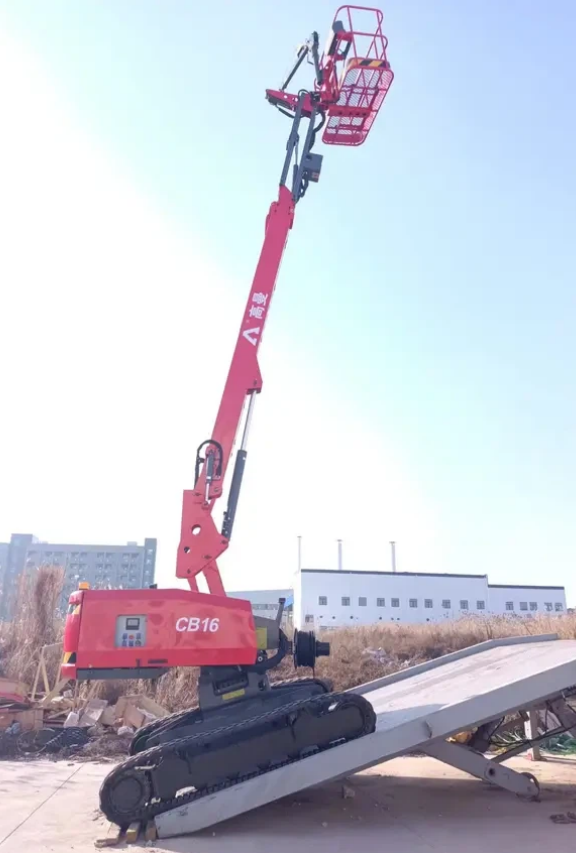
Boom lifts come in several varieties, each designed for different tasks and environments. The three most common types of boom lifts are telescopic, articulated, and crawler boom lifts.
These lifts are designed for straight-line extension, providing maximum reach and height. They are perfect for tasks that require a direct line of sight and access to areas at great heights, such as building maintenance or industrial applications. Telescopic boom lifts are known for their stability and ability to reach extreme heights.
Articulated boom lifts, also known as knuckle booms, feature multi-segment arms that allow the platform to be positioned in complex angles. These lifts are ideal for tasks that require access to areas with obstacles or hard-to-reach spots. Their ability to navigate around obstacles makes them perfect for construction and maintenance jobs in urban environments.
Tracked boom lifts, like those offered by Goman Heavy Industry, are designed with tracks instead of wheels, which makes them ideal for rough, uneven terrain. These lifts offer enhanced stability and traction, making them perfect for outdoor applications, particularly in construction or maintenance in fields or forests. The crawler design allows for easy movement over rough surfaces and provides more control and balance during operation.
Boom lifts have widespread applications in various industries, each benefiting from their ability to provide elevated access.
Construction
In construction, boom lifts are used to access high areas for tasks like installing materials, painting, or cleaning. Their ability to reach difficult spots without the need for scaffolding makes them an essential tool for efficient construction work.
Maintenance
Boom lifts are often used in maintenance tasks, such as cleaning windows or repairing electrical lines. The flexibility in both vertical and horizontal reach reduces the time and risk associated with working at height.
Utilities
Boom lifts are frequently used in utility work, such as servicing power lines or installing streetlights. The height and reach they provide make it easier to complete tasks that would otherwise require ladders or cranes.
Agriculture
In agriculture, boom lifts are used to reach high tree branches, maintain large equipment, or inspect tall structures such as silos. The stability and reach of these lifts make them valuable tools for agricultural operations.
Example Scenarios Where Boom Lifts Reduce Time/Risk
For example, a boom lift can quickly replace lighting on a tall building without requiring complex scaffolding setups. Similarly, using a boom lift to clean high windows in an office building reduces the need for scaffolding and significantly speeds up the job.
Boom lifts offer several advantages over other types of platforms, such as scissor lifts or ladders, particularly when it comes to flexibility and reach.
Reach Range
Boom lifts provide both vertical and horizontal reach, making them far more versatile than scissor lifts, which only offer vertical lift. This extended range makes them suitable for tasks in wider and more complex spaces.
Flexibility in Confined Spaces
Unlike traditional scaffolding, boom lifts can easily maneuver into confined spaces and around obstacles, which makes them more efficient in urban environments. Their ability to extend horizontally also allows them to access areas that would be difficult for other platforms to reach.
Safety and Efficiency
Boom lifts come with built-in safety features, including outriggers, guardrails, and tilt sensors, which reduce the risk of accidents at height. Additionally, their efficiency in reaching difficult areas without the need for scaffolding makes them a time-saving tool for construction and maintenance tasks.
In conclusion, boom lifts are essential tools for any project that requires elevated access. Their ability to provide both vertical and horizontal reach makes them indispensable in industries such as construction, maintenance, and agriculture. With their advanced safety features and ability to navigate difficult terrain, boom lifts are a reliable choice for both small and large-scale operations. For companies like Goman Heavy Industry Technology Co., Ltd., offering high-quality, durable boom lifts is central to enhancing project efficiency and safety.
For more information on high-quality boom lifts and how they can improve your projects, contact us today.
1. What are the advantages of a boom lift compared to other lifting equipment?
A boom lift offers both vertical and horizontal reach, making it more versatile and ideal for complex tasks that require access to both high and distant areas.
2. How does a crawler boom lift perform on uneven terrain?
Crawler boom lifts are designed with tracks instead of wheels, which provides enhanced stability and traction on rough, uneven surfaces, making them ideal for construction sites.
3. Can boom lifts be used in indoor settings?
Yes, boom lifts can be used indoors, particularly articulated and telescopic models, depending on the space and reach required.
4. How do boom lifts contribute to workplace safety?
Boom lifts are equipped with safety features such as outriggers, platform guardrails, and tilt sensors, which ensure stability and reduce the risk of accidents while working at height.
