


No.188 Doubu Avenue, Hannan District, 430090 Wuhan, China


Views: 0 Author: Site Editor Publish Time: 2026-07-13 Origin: Site


Facility managers and arborists face a persistent operational challenge every day. They must execute high-reach maintenance or installation tasks in deeply restricted areas. Standard boom and scissor lifts simply cannot fit through tight entryways. We need a specialized approach to bypass these physical barriers. Relying on scaffolding consumes excessive labor hours and budget. Using unapproved ladder configurations introduces severe safety risks. You can solve this dilemma using a purpose-built compact spider lift. These machines navigate standard 36-inch single doors and narrow gates without sacrificing vertical reach. This guide strips away marketing fluff to examine the exact physical, mechanical, and compliance criteria you need. You will learn how to evaluate, procure, and deploy this equipment successfully. We will explore weight limits, track systems, and precise stabilization rules.
Stowed vs. Working Dimensions: Most compact spider lifts are engineered to track through standard single or double commercial doors (typically 31.5 to 35 inches wide) but require a significantly larger footprint to deploy their outriggers safely.
Weight Distribution: Tracked chassis design and lightweight engineering allow these lifts to operate on sensitive flooring (tile, marble, hardwood) by minimizing ground bearing pressure.
Power Versatility: Selecting between lithium-ion, hybrid, and bi-energy models is strictly dictated by indoor emission compliance and outdoor endurance needs.
Total Cost of Ownership: Evaluating an OEM compact spider lift requires factoring in specialized operator training, proprietary maintenance software, and transport logistics.
Mobile Elevating Work Platforms (MEWPs) revolutionized high-altitude tasks globally. However, traditional models fail completely when access points shrink. You encounter this operational bottleneck frequently during indoor atrium maintenance. Modern atriums often feature massive skylights. Yet, the only ground-level entry point might be a standard double glass door. Historical building renovations pose similar spatial issues. Strict preservation rules forbid altering historic doorways. Restricted-weight mezzanines cannot handle bulky construction equipment. Even backyard tree care requires navigating incredibly narrow residential gates.
Inadequate access carries massive operational risks. You might resort to erecting extensive indoor scaffolding. Scaffolding drives up labor times drastically. It also causes significant site disruption for building occupants. Alternatively, crews might try unsafe ladder configurations. This leads to unacceptable fall hazards. It also triggers severe safety compliance violations on the job site.
Successful narrow access deployment requires specific performance criteria. First, the machine must pass the primary choke point without causing property damage. A scratched door frame ruins client trust instantly. Second, it must reach the target working height safely. Third, it must operate strictly within the structural load limits of the floor. Cracked marble tiles lead to expensive insurance claims. You achieve this delicate balance by selecting specialized, lightweight machinery.
Ignoring the turning radius required immediately after passing through a narrow doorway.
Failing to measure the ceiling clearance along the entire indoor transit route.
Assuming all commercial doors share the exact same 36-inch standard dimension.
Engineers designed the narrow access spider lift to defeat stubborn structural barriers. A variable-width track system serves as the primary mechanism. Hydraulically retractable tracks reduce the machine's overall width during travel. You control this function directly from the remote console. Once you clear the bottleneck, these tracks expand outward. This expansion provides vital tracking stability across uneven terrain. It prevents tipping while navigating curbs or construction debris.
The boom design dictates the incredibly low stowed height. Manufacturers utilize a multi-hinged, articulated boom structure. The boom folds tightly into itself during transit. It rests securely inside the chassis footprint. This logical geometry allows the machine to clear standard door frames easily. You can maneuver it securely under low HVAC ducting. You easily avoid snagging ceiling sprinklers during indoor transit.
Many advanced models feature removable components. Operators can detach the work basket entirely. Some units allow you to remove the basket rotators. These minor adjustments make a massive difference in the field. They shave off critical inches. They enable entry through the absolute tightest architectural chokepoints.
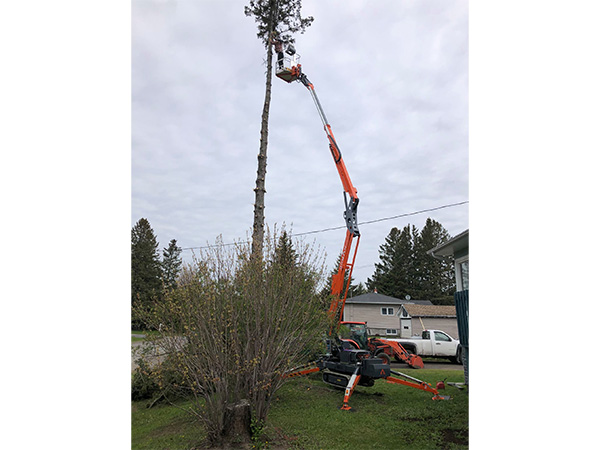
Procurement requires careful analysis of physical machine capabilities. You must evaluate the crucial trade-off between stowed width and vertical reach. Ultra-narrow models fit easily through single doors. However, they may cap out at 40 feet of working height. Larger chassis models can reach 140 feet or more. However, they might require double doors for entry. You must map these specifications against your facility requirements accurately.
Vertical height rarely tells the whole operational story. You need substantial up-and-over outreach. Articulated jib capabilities allow you to reach over complex obstacles. You might need to bypass indoor balconies. You might need to reach over architectural overhangs. A capable compact lightweight boom lift provides exceptional horizontal reach. It maneuvers easily once positioned inside the restricted space.
Ground bearing pressure demands strict daily attention. You must understand the basic physics of weight distribution. When tracking, the machine distributes its weight across long rubber tracks. This keeps the ground pressure relatively low. When elevated, it concentrates that entire weight onto four outrigger pads. The pressure spikes dramatically at these four points. You should rigorously assess the pounds per square inch (PSI) or kilopascals (kPa). Compare these numbers against the structural limits of your flooring. Raised access floors in server rooms are incredibly vulnerable. Older wooden floors require careful load calculations.
Operational State | Contact Surface | Pressure Distribution | Primary Floor Risk |
|---|---|---|---|
Tracking Mode (Transit) | Rubber Tracks | Wide and Even | Surface scuffing on delicate floors |
Elevated Mode (Working) | Outrigger Pads | Highly Concentrated | Tile cracking or structural punch-through |
Always measure the horizontal distance from the outrigger edge to the target work area.
Account for the space consumed by the machine's own outrigger footprint.
Verify the basket capacity at maximum horizontal outreach. Capacity often decreases significantly at full extension.
Selecting the correct power source determines your compliance status. Facility managers often require an indoor construction lift. These enclosed environments demand strictly lithium-ion battery configurations. Electric power guarantees zero-emissions operation. You comply effortlessly with strict indoor air quality regulations. You also benefit from low-noise performance inside occupied buildings. Schools and hospitals require silent maintenance tools. Manufacturers usually equip these indoor models with non-marking tracks. Non-marking rubber prevents unsightly black scuffs on finished commercial floors.
Contractors working varied jobsites often prefer bi-energy or hybrid models. This dual-power approach offers ultimate field flexibility. You use a standard combustion engine for outdoor transit. Diesel engines provide superior torque for muddy gradients. Once you move indoors, you switch directly to the electric motor. Operators plug the machine directly into standard 110V or 220V wall outlets.
Match the power source precisely to your primary utilization rate. Use this simple decision matrix:
Facility Managers: Choose pure electric lithium-ion. It ensures quiet, zero-emission indoor maintenance.
Tree Care Professionals: Select robust diesel engines. They deliver extended outdoor endurance and superior track torque.
Equipment Rental Houses: Invest in bi-energy models. They maximize fleet versatility across diverse customer environments.
Many buyers overlook the critical setup footprint reality. A machine might easily travel through a three-foot single door. However, it often requires a ten-by-ten foot clearance to deploy its outriggers. This creates a functional paradox in tight corridors. If you cannot deploy the outriggers fully, the machine cannot elevate safely. The onboard safety systems will lock you out of the controls.
Advanced variable outrigger technology solves this clearance issue brilliantly. Modern models offer asymmetric outrigger setups. The machine adapts its stabilization footprint to fit restricted corridors. You can deploy legs completely on one side and partially on the other. Sensors monitor the exact position of each outrigger leg. The onboard computer then automatically restricts the boom's swing radius. This prevents the basket from tipping over the narrowest stabilization point. It takes the dangerous guesswork away from the operator.
Floor protection remains a paramount concern during setup. You must use specialized outrigger spreader pads. These pads prevent severe point-loading damage on fragile architectural flooring. Marble and terrazzo require extreme caution.
Operating these machines requires highly specialized training. They handle very differently than standard wheeled booms.
Operators must learn precise remote track control for climbing stairs and steep slopes.
Users must master the auto-leveling stabilization sequence on uneven ground.
Crews need specific familiarization with multi-hinge jib movements.
Always use high-density polyethylene (HDPE) spreader pads under outriggers.
Sweep the floor thoroughly before tracking. Remove hidden debris that could scratch tiles.
Place sturdy plywood sheets over extremely fragile historical floorboards during transit.
You must map specific site requirements directly to manufacturer spec sheets. Identify your narrowest door width carefully. Measure precisely from hinge to jamb. Calculate your maximum floor load capacity. Consult a structural engineer if necessary. Determine the exact maximum reach needed. Always add a ten percent buffer to your maximum reach estimate. Compare these distinct data points against official product literature.
Evaluating an OEM compact spider lift involves looking beyond the metal framework. Prioritize robust aftermarket support and advanced telematics. You want comprehensive warranties and guaranteed local parts availability. Onboard diagnostic screens help technicians troubleshoot issues rapidly. This telematics data prevents frustrating equipment downtime during critical maintenance projects.
When deciding between procurement methods, focus purely on your anticipated equipment utilization. High-utilization scenarios favor long-term acquisition. Dedicated facility maintenance teams usually fall into this category. Occasional or highly varied projects often favor short-term deployment strategies. Specialized contractors prefer accessing different machine sizes per project.
Take one actionable next step before finalizing any equipment agreement. Request a physical site survey from your local distributor. Let a certified professional verify your exact entry measurements. Let them confirm your floor load capacities beforehand. This simple step prevents massive logistical headaches on delivery day.
A specialized tracked lift successfully bridges the gap between restricted access points and high-altitude tasks. These machines provide incredible versatility for modern facility management and specialized construction. You eliminate the physical dangers of ladders. You bypass the severe site disruption of scaffolding entirely.
Always verify the crucial difference between transport width and the final deployment footprint. A machine remains useless if it enters a room but cannot deploy its outriggers safely. Ensure your operators receive specialized, manufacturer-approved track training before operation. Match your power source precisely to your primary working environment. Following these simple steps ensures safe, efficient, and compliant high-reach operations every single time.
A: Ultra-compact models can retract their tracks to approximately 31 to 32 inches. This incredibly narrow profile allows the equipment to pass easily through a standard 36-inch single commercial door. Always measure your tightest chokepoint carefully before finalizing your equipment request.
A: Yes. Rubber-tracked undercarriages are specifically designed to climb stairs and navigate steep gradients securely. However, the operator must strictly follow the manufacturer's maximum gradeability specifications. You must also verify that the internal stair structure can support the machine's highly concentrated weight.
A: Regional compliance standards vary globally. In the US, you must comply with ANSI A92 and OSHA regulations. In Europe, you need an IPAF 1b category certification. You absolutely need employer-certified training specific to compact crawler booms due to their completely unique stabilization mechanics.
