


No.188 Doubu Avenue, Hannan District, 430090 Wuhan, China


Views: 0 Author: Site Editor Publish Time: 2026-09-01 Origin: Site


Accessing high workspaces often presents a frustrating operational bottleneck for facility managers and contractors alike. You must frequently navigate tight entryways, protect highly sensitive flooring, and traverse rough terrain. Standard construction machinery completely blocks your path through narrow standard doorways. Choosing the right equipment isn't just about maximizing your vertical reach anymore. You need to carefully match chassis dimensions, ground-bearing pressure, and power types to your specific site realities. A simple miscalculation can quickly crack delicate tiles or trigger costly safety violations.
This article provides a concrete evaluation framework to solve these exact access challenges. We will thoroughly explore how to measure entry points, assess stabilization footprints, and select compliant power sources. You will learn to evaluate your job site accurately based on established industry practices. By following these practical guidelines, you can confidently select the exact machinery needed for confined spaces without overpaying or under-speccing.
Assessing stowed dimensions against entry points (doors, gates) is the non-negotiable first step in equipment selection.
Spider lift working height selection must account for outrigger footprints; higher reach requires wider stabilization.
Power source dictates application: hybrid or electric lithium models are mandatory for a spider lift for indoor use due to emissions and noise regulations.
Tracked chassis distribute weight efficiently, making them the only viable alternative when standard boom or scissor lifts exceed floor load limits.
Standard boom and scissor lifts consistently fail inside narrow spaces. They feature exceptionally wide wheelbases engineered for open, paved surfaces. Heavy operating weights quickly overload standard floor tiles and internal structures. Furthermore, conventional tires struggle heavily when operators try leveling the machine on uneven ground. Operators simply cannot maneuver rigid frames safely past tight corners or structural columns.
We see these operational bottlenecks on almost every intricate job site. You cannot easily force standard construction equipment into a crowded atrium, a narrow factory aisle, or a historic courtyard. You risk severe structural damage. Attempting to squeeze standard lifts through tight entryways frequently results in scraped walls and compromised door frames.
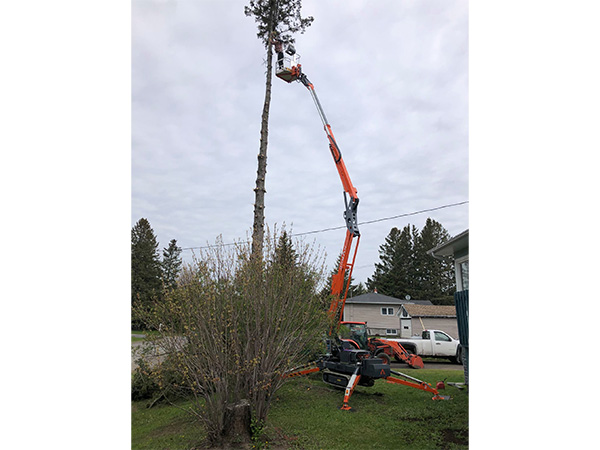
Here is where the alternative solution shines. A tracked aerial work platform directly solves these stubborn spatial constraints. It utilizes a specialized crawler undercarriage. The tracks spread the machine's overall mass across a much larger surface area. This low ground-bearing pressure prevents tile cracking and lawn damage. Variable outrigger configurations allow you to set up safely, even if you face steep inclines or staircases. You can configure each leg independently to bypass obstacles entirely.
However, we must acknowledge a transparent trade-off during operation. These specialized machines provide superior access. They distribute weight beautifully across fragile surfaces. Yet, they require longer setup times. You must manually or automatically deploy outriggers before extending the boom arm. Drive-able boom lifts let you reposition instantly. Conversely, outrigger deployment takes a few extra minutes. You must balance this minor delay against the immense benefit of reaching previously inaccessible vertical areas safely.
The Baseline Problem: Standard wheelbases cannot fit through pedestrian doors.
The Weight Issue: Solid tires cause destructive point-loading on interior floors.
The Leveling Challenge: Traditional machinery cannot auto-level safely on staircases.
Choosing the proper machine starts before you even arrive at the work zone. You must evaluate all facility entry points thoroughly. Measure standard double doors. Check the clear width of garden gates. Measure the tightest corridors along your path. Compare these exact figures directly against the machine's transport width and height. Transport dimensions represent the machine in its fully stowed configuration.
Many older buildings feature single doors measuring just 32 inches wide. In these scenarios, you must select a compact spider lift. These advanced units feature hydraulically adjustable track widths. You retract the tracks inward to pass safely through narrow bottlenecks. Once inside the main workspace, you expand the tracks outward to regain travel stability.
We must measure vertical requirements carefully. Proper spider lift working height selection prevents costly site delays. Do not confuse platform height and working height. Platform height measures the vertical distance from the ground directly to the basket floor. Working height adds roughly six feet to account for the operator's vertical reach. Always specify your required working height to the rental fleet or equipment dealer.
Horizontal outreach often proves far more critical than pure vertical lift. You must map the exact horizontal distance from your closest available outrigger setup zone directly to the actual work target. Obstacles like church pews, escalators, or decorative water features will force you to set up farther away. You need sufficient boom extension to bridge that gap.
Finally, you must factor in strict payload realities. An inverse relationship exists between maximum horizontal outreach and basket weight capacity. Standard safety sensors constantly monitor the moment load.
One operator carrying light hand tools allows the machine to achieve maximum horizontal outreach.
Two operators carrying heavy installation materials significantly restrict horizontal extension capabilities.
On-board computer systems will physically halt boom movement if you exceed the structural load curve.
Power sources completely dictate where and how you can operate. Diesel and gas engines provide robust power for exterior construction sites. They excel during heavy grading projects and extended outdoor tasks. You can run them continuously without ever relying on charging infrastructure. However, combustion engines produce toxic exhaust and significant noise. You cannot legally or safely run them inside enclosed spaces.
Indoor jobs demand strict environmental compliance. If you manage an interior facility, you absolutely need a spider lift for indoor use equipped with an electric motor. Lithium-ion battery models eliminate toxic emissions completely. They also operate quietly. Malls, historic buildings, and pharmaceutical plants universally mandate zero-emission machinery. Electric motors keep the air clean and keep tenant disruption minimal.
For maximum operational flexibility, consider bi-energy or hybrid models. These units combine a combustion engine and an electric motor into one chassis. They offer the highest return on investment for rental fleets. Contractors use the diesel engine to traverse rough outdoor terrain efficiently. Once they reach the building entrance, they switch instantly to clean electric power for sensitive indoor finishing work. This dual capability eliminates the need to rent two separate machines.
Common Power Sources and Ideal Operating Environments
Power Source | Best Applications | Emissions | Noise Level |
|---|---|---|---|
Diesel / Gas Engine | Exterior sites, heavy grading, long outdoor use | High (Exhaust) | High |
Electric / Lithium-Ion | Malls, atriums, historic buildings, cleanrooms | Zero emissions | Very Low |
Bi-Energy / Hybrid | Indoor/outdoor transition projects, rental fleets | Selectable | Variable |
Every facility manager fears severe floor damage. Standard mobile elevating work platforms concentrate massive machine weight onto four small solid tires. This intense point-loading destroys delicate interior surfaces rapidly. Data centers often utilize raised access floors to hide thick power cables. These specific floor tiles crack easily under heavy rolling loads.
We must evaluate floor load limits carefully. You need to calculate the machine’s dead weight. Then, you must calculate the concentrated point-loading when the machine rests entirely on its deployed outriggers. Sensitive flooring types require special attention. Marble lobbies, polished gymnasium floors, and raised access floors will buckle under excessive pressure. Ignoring these limits leads directly to catastrophic property damage.
To mitigate these structural risks, operators should utilize proven stabilization strategies. First, deploy specialized outrigger pads. These large composite mats distribute the intense point-loading across a broader surface area. Second, assess spatial constraints strictly for outrigger deployment. Standard outriggers require a wide footprint. Ensure you have enough physical floor space to drop all four legs.
Third, utilize multi-position outriggers intelligently. Advanced machines let you configure each leg independently. You can deploy one leg over a staircase while resting another leg on a steep grassy slope. This flexibility is critical for complex setups.
Track selection also matters immensely during project planning. Standard black rubber tracks leave dark scuff marks on finished concrete and tile. Always specify non-marking tracks for delicate interior jobs. Conversely, use aggressive track treads when tackling deep mud or severe outdoor inclines. The right crawler design prevents slippage and keeps operators safe on wet grass.
Careful planning prevents equipment mismatches. You should conduct a comprehensive site assessment before any heavy machinery arrives at your facility. Start by performing detailed access route mapping. Walk the exact path the machine will travel. Verify all turning radiuses. Measure the width of accessibility ramps. Check the specific weight limits of service elevators. A machine might fit physically inside an elevator, but it could easily exceed the cable weight capacity.
Next, evaluate the terrain and gradient along the travel path. You must confirm the maximum travel grade. Find out what slope the spider lift for narrow access must climb before reaching the final setup zone. Crawler tracks offer excellent climbing traction. However, every model features a documented maximum climbing angle. Exceeding this exact limit causes dangerous instability and risks a rollover.
You must also identify severe clearance hazards. Look up and map any overhead obstructions. Note the exact location of high-voltage lines. Look down and check thoroughly for subterranean voids. Underground parking garages often restrict the amount of dead weight you can place directly above them. Setting up heavy machinery directly over a hollow structural void creates a severe collapse hazard.
After compiling this critical data, move to the shortlisting phase. Use your precise measurements to request a detailed quote. Share your findings with a qualified equipment dealer. Ask them to conduct an advanced site survey if you uncover complex structural challenges. Professional verification protects your project timeline.
Choosing the correct Spider Lift means perfectly aligning tough site constraints with your exact project requirements. You must balance restrictive doorway dimensions, strict floor load limits, and overall payload needs. Relying solely on vertical height metrics will predictably lead to poor equipment choices and compromised safety.
Careful pre-measurement serves as your absolute best defense. A thorough site assessment prevents costly downtime. It also entirely eliminates the risk of an equipment mismatch upon delivery. We strongly recommend walking the entire access route twice. Document every single structural obstacle.
Do not leave this process to guesswork. Consult a technical access specialist today. Request a detailed fleet spec sheet to compare machine dimensions thoroughly. You can also book a free site survey. Professional guidance guarantees you secure the right fit for your next complex operation, keeping your crew safe and your facility intact.
A: Based on industry standards, many compact models stow down to 31–35 inches wide. This narrow profile allows the machine to easily fit through standard single or double doors. You can maneuver them through tight garden gates and narrow interior corridors without modifying the building structure.
A: Yes, operators typically need formal certification. Local regulatory requirements apply. For example, the widely recognized IPAF category 1b (Static Boom) certification specifically covers these machines. Training focuses heavily on outrigger deployment safety, weight distribution, and correct auto-leveling procedures to prevent tip-overs.
A: Yes, they are highly capable on uneven terrain. Crawler tracks provide excellent climbing traction for steep slopes. Furthermore, multi-position outriggers feature an auto-leveling function. This technology allows operators to set up the chassis perfectly level on stairs or gradients up to 15-20 degrees safely.
A: Scissor lifts use solid tires. They concentrate heavy machine weight onto four small contact points, causing high point-loading. Spider lifts use rubber tracks and outrigger pads. They distribute the machine's mass across a much larger surface area, resulting in exceptionally low ground-bearing pressure.
