


No.188 Doubu Avenue, Hannan District, 430090 Wuhan, China


Views: 0 Author: Site Editor Publish Time: 2026-07-10 Origin: Site


Selecting the wrong power source for a compact aerial platform creates massive operational bottlenecks. You might face indoor emission compliance failures. Alternatively, operators could strand equipment on remote, rough-terrain job sites. There is no universal best power option available today. Your optimal choice depends entirely on daily duty cycles and strict environmental regulations. It also relies heavily on your specific ratio of indoor-to-outdoor utilization. Facility managers, arborists, and rental fleets need clear guidance immediately. We provide a transparent, criteria-based breakdown of gas, battery, and hybrid power systems here. You will evaluate which specific configuration perfectly aligns with your unique operational requirements. We will explore key site constraints and practical implementation risks. You will ultimately discover the exact power setup your daily projects demand.
Gas/Diesel remains the standard for uninterrupted, heavy-duty outdoor applications (like tree care), but faces increasing regulatory and noise restrictions in urban zones.
Lithium-ion battery models eliminate emissions and noise, unlocking high-margin indoor and overnight work, though they require strict charging infrastructure management.
Hybrid systems offer the highest fleet utilization rates by bridging indoor/outdoor constraints, but come with a higher initial capital expenditure and dual-system maintenance requirements.
Evaluating any spider lift hybrid lift requires calculating Total Cost of Ownership (TCO) across a 5-to-7-year lifecycle, factoring in fuel, battery replacement, and maintenance downtime.
Begin by defining your exact indoor versus outdoor ratio. You must know the percentage of work occurring inside climate-controlled facilities. Common examples include modern shopping malls, office atriums, and large convention centers. Compare this metric against rough outdoor terrain applications. Arborists often navigate deep mud and steep backyard inclines. You cannot use the exact same equipment strategy for both extremes. A clear utilization ratio prevents costly procurement mistakes.
Local municipal regulations heavily impact your equipment selection process. Analyze urban zero-emission zones carefully. Many major cities now ban combustion engines entirely in specific districts. Facility-specific OSHA requirements mandate strict indoor air quality controls. EPA guidelines dictate severe emission limits inside enclosed spaces. You cannot risk heavy fines or unexpected project delays. Project shutdowns cost your business valuable time and money. Proactive compliance ensures uninterrupted daily operations.
Job site logistics matter just as much as environmental regulations. Assess infrastructure realities before deploying heavy machinery. Consider the daily availability of reliable charging stations. Some work sites provide easy overnight access to standard 110V or 220V electrical outlets. Contrast this against the heavy logistical drag of transporting liquid fuel. Remote sites often lack basic utility access entirely. Operators must carry heavy jerry cans across uneven ground. Fuel spills create massive environmental hazards. You must plan your power delivery proactively.
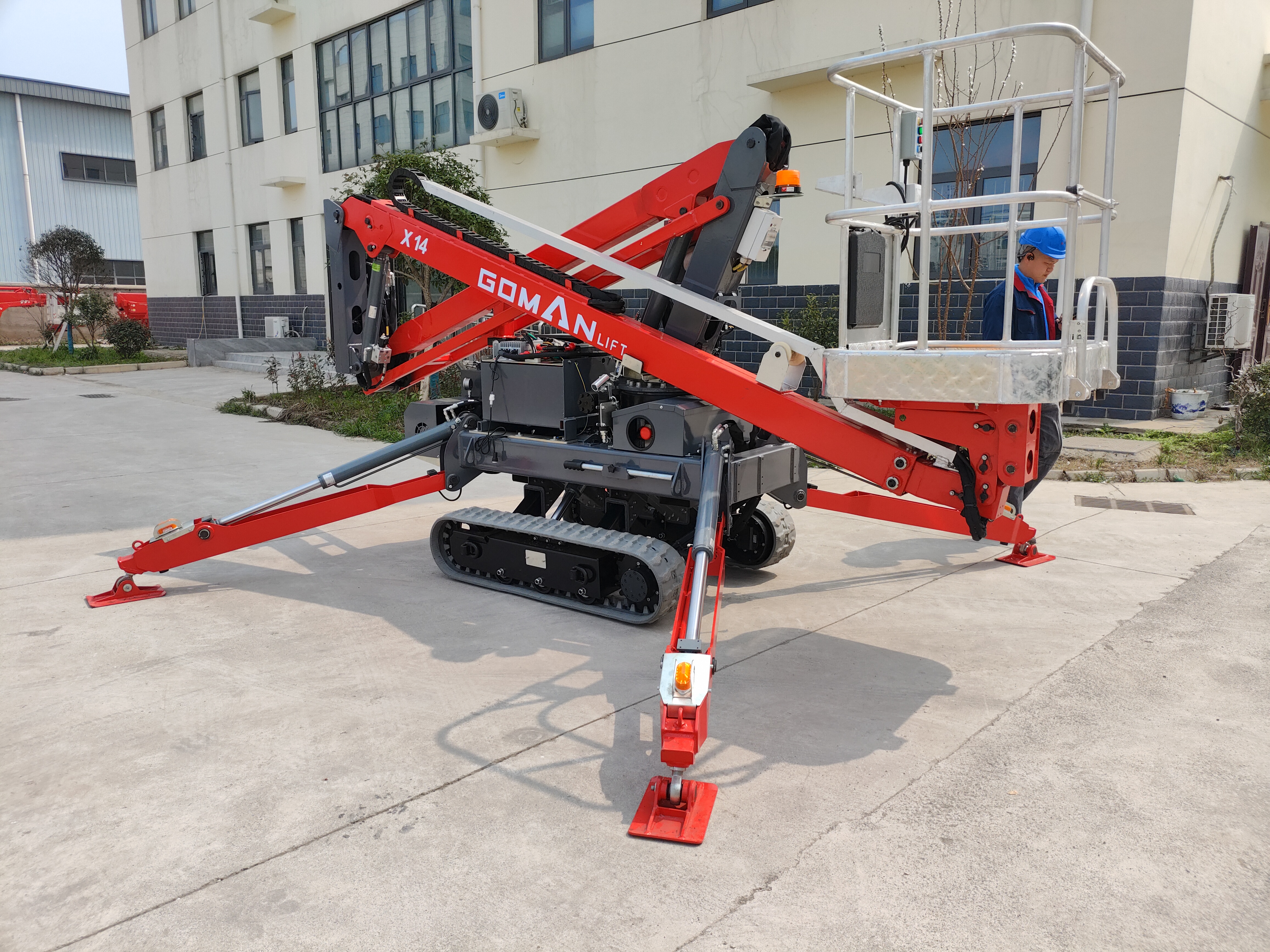
A gas-powered spider lift excels in physically demanding environments. You benefit directly from zero charging downtime. Operators simply refuel the tank and resume work immediately. Extreme cold weather does not reduce typical engine runtime. Heavy-duty cycles rely heavily on this proven mechanical reliability. Continuous multi-day arboriculture work demands uninterrupted power output. Traditional combustion engines handle these grueling schedules effortlessly.
Internal combustion engines deliver sustained hydraulic power continuously. This consistent energy output is necessary for navigating steep gradients safely. It also helps deploy outriggers on uneven, muddy ground without stalling. The raw mechanical torque easily pushes heavy tracks through thick underbrush. Hydraulic pumps operate at peak efficiency under constant engine RPMs. You gain maximum lifting capabilities in tough outdoor conditions.
However, you must consider several serious implementation risks.
They remain strictly limited to outdoor use. Carbon monoxide risks and exhaust soot endanger indoor workers severely.
You will face higher ongoing maintenance demands. Technicians must replace air filters and manage oil changes regularly. Internal engine wear requires constant monitoring and preventative care.
Operators risk violating local noise ordinances. Residential neighborhoods and hospital zones often strictly enforce decibel limits. Early morning start times might be legally prohibited.
A battery-powered hybrid lift solves complex indoor access challenges perfectly. These advanced machines offer zero emissions and near-silent operation. They feature significantly fewer moving parts than combustion alternatives. This streamlined design leads directly to reduced routine maintenance. Electric motors do not require frequent oil changes or spark plug replacements. You save valuable mechanic hours over the machine lifespan.
Lithium-ion technology serves as the standard for professional buyers today. It vastly outperforms traditional lead-acid battery alternatives. You get noticeably faster charging times between heavy shifts. Opportunity charging works perfectly during standard operator lunch breaks. Memory degradation does not occur in modern lithium cells. Lithium-ion delivers a much longer overall lifespan despite the initial premium cost. Smart buyers view this as a long-term operational investment.
Still, electric variants present unique implementation risks to manage.
They require highly disciplined operator behavior daily. A dead battery on a remote site completely halts production. Crews must remember to plug machines in every single night.
Cold weather can temporarily degrade cell performance. Expect reduced overall runtime during freezing winter shifts. Battery heaters become necessary in extreme northern climates.
You must budget for steep replacement costs. End-of-lifecycle battery swaps demand significant capital reserves.
A hybrid spider lift provides incredible operational flexibility for modern fleets. It combines a robust combustion engine for outdoor travel. It then utilizes an electric motor for indoor, silent operation. This dual-power strategy eliminates traditional access boundaries entirely. Operators drive across muddy fields using raw gas power. They seamlessly switch to electric mode before entering a pristine lobby. You maximize productivity across entirely different environments.
Rental companies love this comprehensive fleet flexibility. Mixed-use contractors bid confidently on rugged outdoor contracts. They simultaneously secure sensitive indoor facility maintenance jobs. One single machine handles both extremes effortlessly. You avoid purchasing two separate lifts for different environments. This consolidation improves your overall return on investment significantly. Fleet utilization rates typically skyrocket when deploying hybrid models.
You should acknowledge a few key implementation risks beforehand.
They demand the highest upfront acquisition cost. Integrating two distinct power systems requires expensive engineering and premium components.
Increased mechanical complexity requires highly skilled service technicians. Your maintenance team must deeply understand internal combustion engines. They must also troubleshoot high-voltage electrical systems safely.
They carry a heavier gross machine weight. Single-power units weigh noticeably less due to fewer internal components. This extra weight affects trailer towing capacities.
Let us compare the operational traits across these three main types.
Power Source Strategy | Ideal Operating Environment | Acoustic Noise Level | Routine Maintenance Need |
|---|---|---|---|
Gas or Diesel Engine | Rough terrain, remote outdoors | Very High | Frequent (engine parts) |
Lithium-ion Battery | Indoor, urban, overnight shifts | Extremely Low | Minimal (electrical focus) |
Dual Hybrid System | Mixed indoor and outdoor sites | Variable by mode | High (manages dual systems) |
Evaluate the true operational value entirely beyond the initial sticker price. Compare the long-term lifecycle benefits of your chosen power source. A combustion engine requires constant fuel purchases and frequent fluid changes. A battery unit relies on cheap electricity and needs fewer daily checks. You must balance these unique factors carefully over a multi-year timeline. Future battery replacement costs must be weighed against years of fuel savings. Smart procurement requires a holistic view of daily operational expenses.
hybrid chassis synergies depend heavily on the specific power delivery. A smooth, proportional electric drive feels vastly different from raw engine torque. Electric motors provide precise micro-movements inside tight hallways. They prevent jerky motions near delicate glass facades. Gas engines deliver aggressive power to push through deep mud. You must match the drive characteristics to your primary terrain challenges.
Selecting the right OEM spider hybrid lift requires careful vetting. Follow these exact steps when evaluating an spider lift hybrid lift partner.
Look for manufacturers offering transparent and comprehensive battery warranty terms. Pro-rated replacement clauses must be clearly defined in writing.
Evaluate your local dealer networks thoroughly before purchasing. They must easily handle proprietary software updates. They also need specialized diagnostic tools for complex hybrid systems.
Verify the immediate availability of non-marking tracks. Indoor-focused electric models essentially require them to protect fragile flooring. Standard black tracks leave permanent scuffs on expensive tiles.
Choose gas models strictly for dedicated outdoor tree-care operations. Select battery units for sensitive facilities management and indoor construction. Invest in hybrid models for rental fleets requiring absolute maximum versatility. Matching the machine to the environment eliminates frustrating daily bottlenecks. You protect your profit margins by avoiding regulatory fines and downtime.
We strongly advise buyers to audit their last 12 months of job sites. Calculate your actual indoor-to-outdoor split accurately. Document the availability of onsite power across your typical projects. Do this specific research before requesting a formal dealer demonstration. Data-driven procurement prevents costly fleet mismatches.
Contact our sales team today for a tailored equipment comparison. We will customize exact recommendations based on your fleet size and primary applications. Our experts will help you navigate complex emission regulations effortlessly. Reach out now to secure the perfect aerial platform solution.
A: Yes. The hybrid chassis provides excellent weight distribution. You get the exact same traction as gas models. Ensure the battery has sufficient charge. It must power the hydraulic drive motors over challenging ground.
A: It varies by manufacturer and battery size. Most modern lithium-hybrid models easily complete a standard 8-hour indoor shift. This assumes a single full charge under normal duty cycles.
A: We highly recommend them for indoor use. However, non-marking tracks are typically an optional upgrade. This depends on the specific manufacturer configuration. You should always specify them during the quoting process.
A: All compliant machines feature emergency lowering systems. You usually use an auxiliary manual descent valve. Some units include a small independent 12V backup. These safely return the basket to the ground without main power.
