


No.188 Doubu Avenue, Hannan District, 430090 Wuhan, China


Views: 0 Author: Site Editor Publish Time: 2026-10-10 Origin: Site


High-frequency, multi-site jobs demand equipment balancing transportability and safe height access. Choosing the wrong machine drives up transport costs and project delays. Fleet managers face a daily battle between speed and site constraints. You cannot afford to deploy heavy machinery when a lightweight solution works better. Both trailer-mounted and tracked lifts solve the problem of mobile access. They eliminate the need for massive carrier vehicles. Yet, they serve vastly different job site environments.
Our objective is clear. We provide a strict, evidence-based evaluation of both platforms. You will explore a detailed comparison of logistical requirements, site footprint, and upfront operational elements. We evaluate these factors strictly to help contractors finalize procurement or rental decisions. You will learn exactly how to match the right machine to your daily field challenges. This analysis prevents costly deployment errors. It ensures you deploy the most efficient tool every time.
Transport Efficiency: Trailer mounted work platforms eliminate the need for secondary transport vehicles, drastically reducing mobilization costs for fast-paced, multi-site schedules.
Terrain Flexibility: Tracked lifts distribute weight evenly, making them essential for delicate flooring, muddy terrain, and narrow-gate access, though they require a separate trailer for highway transport.
Cost vs. Capability: Towable units generally present a lower acquisition and maintenance cost, whereas tracked lifts offer specialized access capabilities at a premium.
The Decision Driver: The choice ultimately hinges on the ratio of "time spent on the highway" versus "complexity of the final work area."
Fleet operators constantly evaluate hidden costs. Moving heavy equipment drains budgets quickly. Navigating tight or fragile job sites creates major logistical headaches. You must balance transport speed against site accessibility. Getting a machine to the site represents only half the battle. Maneuvering it safely into position forms the other half.
A successful deployment relies on several strict criteria. First, it minimizes mobilization time. Second, it avoids property damage. Third, it ensures OSHA/ANSI compliant stabilization for operators. Meeting these three pillars defines operational success. You miss one, and project margins evaporate.
This creates a core trade-off. You must choose between two distinct design philosophies. One involves an all-in-one towable lift built for highway speed. The other features a crawler-mounted machine built for localized agility. Your daily operational route dictates which design holds more value. Contractors waste thousands of dollars forcing the wrong machine into unsuitable environments.
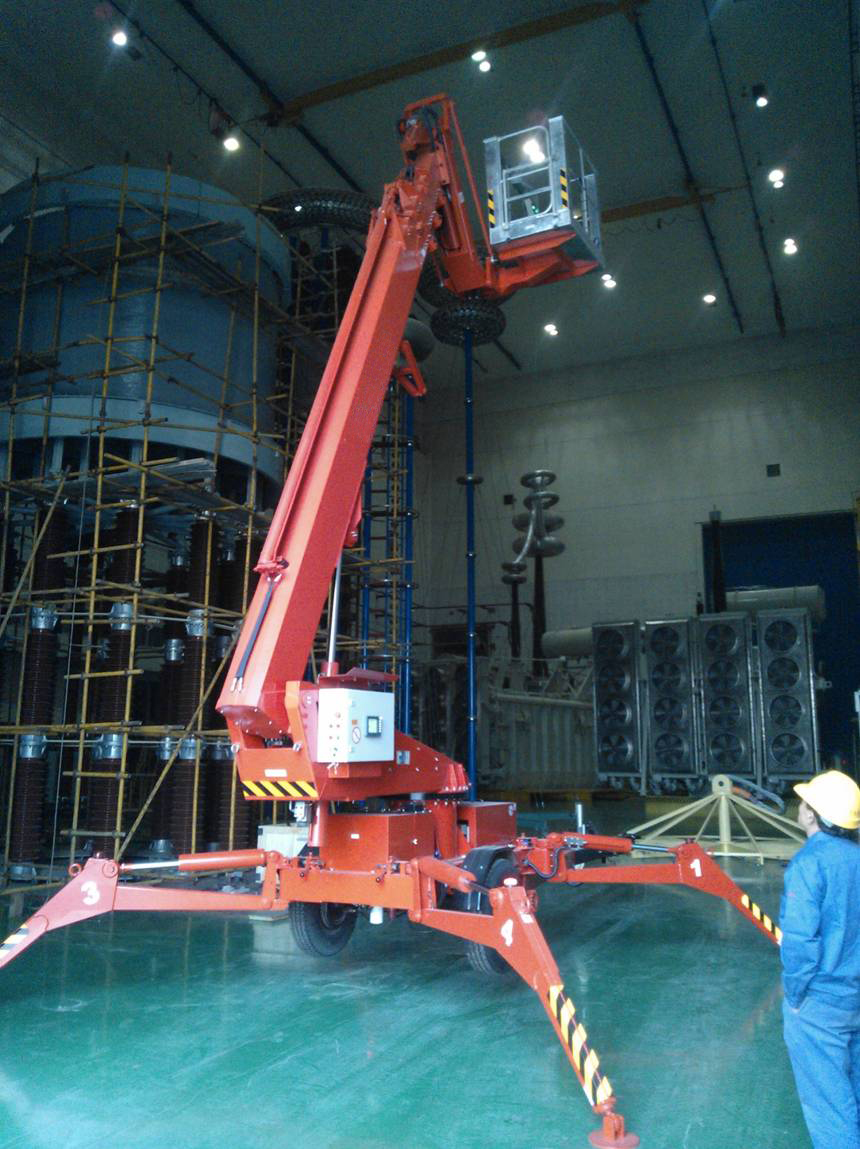
Manufacturers build the Trailer Mounted Work Platform on a road-legal chassis. You can tow these machines using standard commercial trucks. A standard half-ton or three-quarter-ton pickup easily handles the load. This design prioritizes rapid movement across public roads. It merges the vehicle and the lift into a single travel unit.
The primary advantage lies in its role as highly efficient multi-site access equipment. Crews simply hitch the unit, drive, unhitch, and set up. The entire process takes minutes. You never wait for heavy-haul flatbed deliveries. This autonomy empowers small crews to tackle three or four scattered jobs daily.
Setup mechanics rely heavily on hydraulic outriggers. These outriggers establish a rigid, level baseline for safe elevation. Because of this, the machine performs best on firm, flat surfaces. Asphalt, poured concrete, and compacted dirt offer the ideal foundation. You must ensure the ground can support the outrigger point loads.
Certain industries heavily favor this equipment. Property maintenance teams, municipal street lighting crews, and window cleaners rely on them daily. Residential tree trimmers also benefit immensely. These applications usually allow the tow vehicle to park very close to the actual work zone. The machine excels when transit time outweighs complex site maneuvering.
Tracked lifts, often called spider lifts, utilize a crawler track system paired with a narrow chassis. They typically feature a multi-jointed articulated boom. This boom provides incredible up-and-over reach capabilities. Designers built these machines to conquer complex, obstructed environments. The footprint remains compact while delivering impressive vertical extension.
The primary advantage centers on rough-terrain capability. They also deliver remarkably low ground pressure. The tracks disperse the machine’s weight across a larger surface area. This protects sensitive floors perfectly. You can drive them over porcelain tile, finished concrete, or manicured golf turf without causing damage.
Setup mechanics offer incredible flexibility. The machine maneuvers independently through standard single or double doorways. Operators drive them deep into interior spaces. Outriggers are still strictly required for elevation. However, the tracks allow precise positioning in heavily constrained areas before deployment. You can inch the machine into the exact spot needed.
Best use cases involve highly restricted or fragile environments. Indoor atrium maintenance requires this delicate touch. Sloped landscaping projects demand track traction. Backyard utility work often involves squeezing through narrow residential gates. Construction sites featuring deep mud or unpaved foundations also require crawler mobility. When the final fifty feet pose the biggest challenge, tracked lifts win.
Logistics often dictate project profitability. A trailer mounted boom lift delivers unmatched hitch-and-go capability. You hook it to your existing fleet truck. This eliminates expensive float or delivery fees entirely. Your team controls the schedule.
Tracked lifts require a separate transport vehicle. You must load them onto a flatbed or heavy-duty transport trailer. This increases your logistical footprint immediately. You have to secure the machine, haul the trailer, and find enough parking space for the truck, trailer, and lift at the site.
Once unhitched, positioning a towable lift manually proves physically demanding. Operators often require vehicle assistance to nudge the unit into tight spots. The lack of an independent drive system limits micro-adjustments on uneven ground. You mostly work from where you drop it.
Tracked lifts are fully self-propelled. They navigate narrow aisles and debris effortlessly. They execute tight zero-radius turns. Operators can walk alongside the machine using remote controls. This grants unmatched visibility and precision when moving through cramped corridors.
Standard pneumatic tires on towable units create higher point-loading. The weight focuses intensely on small contact patches. The hydraulic outriggers also require solid, reliable ground pads. If you deploy them on soft earth, they risk sinking.
Tracks prevent rutting on soft turf completely. The weight distribution mimics a snowshoe. Furthermore, non-marking track options exist for indoor use. You can drive a tracked unit across a gymnasium floor without leaving black scuff marks.
Mobile Access Platform Comparison Chart
Evaluation Metric | Trailer Mounted Lift | Tracked Lift (Spider Lift) |
|---|---|---|
Transport Method | Directly towable via pickup truck | Requires separate flatbed/trailer |
Site Maneuverability | Manual push or vehicle assist | Self-propelled, remote-controlled |
Ground Pressure | High (pneumatic tires) | Low (weight-dispersing tracks) |
Gate/Door Access | Limited to wider exterior paths | Fits standard single/double doors |
Best Surface Type | Firm, level (asphalt, concrete) | Fragile, muddy, or sloped terrain |
Capital and rental costs strongly influence procurement. A standard towable cherry picker generally costs 30-40% less to acquire. Rental rates reflect this difference. Tracked spider lifts of similar reach carry a notable premium. You pay for the complex undercarriage and specialized hydraulic track systems.
Vehicle compatibility introduces unique risks. Towing a portable work platform requires strict adherence to towing capacity limits. You must verify proper hitch classes. Functioning trailer brake systems remain legally mandatory. Overlooking these details invites severe liability and highway accidents.
Maintenance realities divide the two machines sharply:
Trailer units demand standard DOT trailer maintenance. You must inspect tires, axles, brake lights, and physical brakes regularly.
Tracked units require specialized track tensioning. Operators must clear the undercarriage of mud and debris daily. You also manage more complex, compact hydraulic routing systems.
Training and compliance matter equally. Both machines require MEWP (Mobile Elevating Work Platform) operator certification under ANSI A92 standards. However, tracked lifts demand additional operator competency. Training must cover slope navigation safely. Operators must also master track-steering nuances to avoid tearing up turf during turns.
Fleet decisions require structured thinking. Review your average project profiles. Look closely at where your crews spend the most time. Use the following guidelines to finalize your choice.
Opt for the trailer-based platform if:
Your crews hit two or more distinct geographic locations per day.
The work area is highly accessible by a standard vehicle.
The ground surface features firm, level characteristics.
Minimizing upfront rental costs and transport logistics represents your primary KPI.
Opt for the tracked lift if:
The machine must physically pass through standard doors, narrow gates, or tight alleys.
The work surface is highly sensitive (turf, marble) or aggressively uneven and muddy.
The equipment will remain stationed on a single, complex job site for days or weeks.
The required work zone is unreachable by a standard towing vehicle.
Choosing the right mobile access equipment dramatically impacts your daily efficiency. A trailer-based platform optimizes for highway speed and multi-site productivity. It empowers small crews to move quickly between firm, accessible locations. Conversely, a tracked lift optimizes for off-road agility. It handles delicate positioning and easily navigates restrictive entryways.
You must take immediate action to refine your fleet. First, audit your most frequent job site profiles over the last quarter. Next, assess your fleet’s current towing capabilities and hitch ratings. Measure your typical gate and doorway restrictions precisely. Finally, request a detailed spec sheet comparison from your dealer based on your exact working height requirements.
A: Yes, most half-ton to one-ton pickups safely tow these platforms. Ensure the truck’s towing capacity exceeds the lift's gross weight. This weight typically falls between 3,000 and 7,000 lbs. You must also equip the truck with the correct hitch and a functioning brake controller.
A: Yes. Despite the highly stable tracks used for driving and positioning, almost all tracked spider lifts require hydraulic outriggers. You must deploy and level these outriggers fully before the boom can be elevated safely.
A: It can be, provided the ground remains firm, dry, and relatively level. However, you must use proper outrigger pads. These pads distribute the machine's load and prevent the metal stabilizers from sinking dangerously into soft soil.
A: Tracked lifts are generally superior for indoor use. Machines equipped with lithium-ion batteries and non-marking tracks fit easily through standard doorways. They also maintain very low ground pressure, which protects expensive finished floors from cracking.
